Los Angeles · Pond & Water Feature Services
Waterfalls
Backyard cascades in set stone, pondless or falling into a pond, from a two-foot garden fall to a hillside run.
Waterfalls · Los Angeles
What A Backyard Waterfall Is
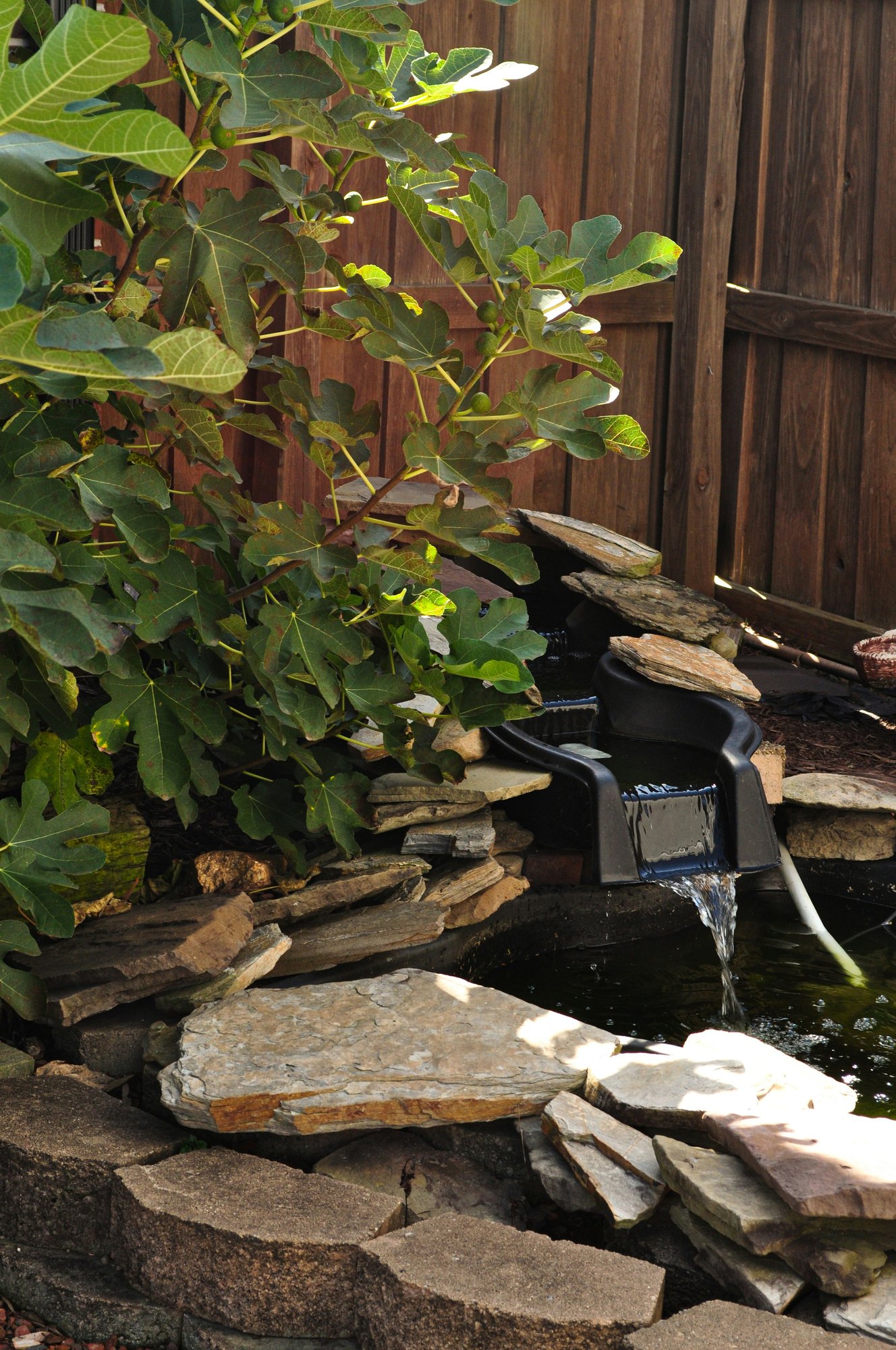
A waterfall is stone arranged so water falls over it in a way that looks like it happened rather than like it was delivered. Underneath, it is a lined channel, a set of stacked and pointed ledges, a pump at the bottom and a return line hidden up the back. Two versions get built here. A pondless waterfall runs into a gravel-covered reservoir with no open water at all, which means no depth to trigger the barrier rules, nothing for a child to fall into, very little water use and almost no maintenance. A pond waterfall falls into an open pond and doubles as the aeration and the biological filter head, so it is doing real work as well as making the noise. Waterfall construction is the part of this trade where the difference between crews is most visible, because a fall is judged entirely on whether the stone reads as natural and whether the water sheets, splits and lands the way it does in the mountains. That comes from how the stone is chosen and set, not from the size of the pump.
Why Go With Us As Your Waterfall Builder
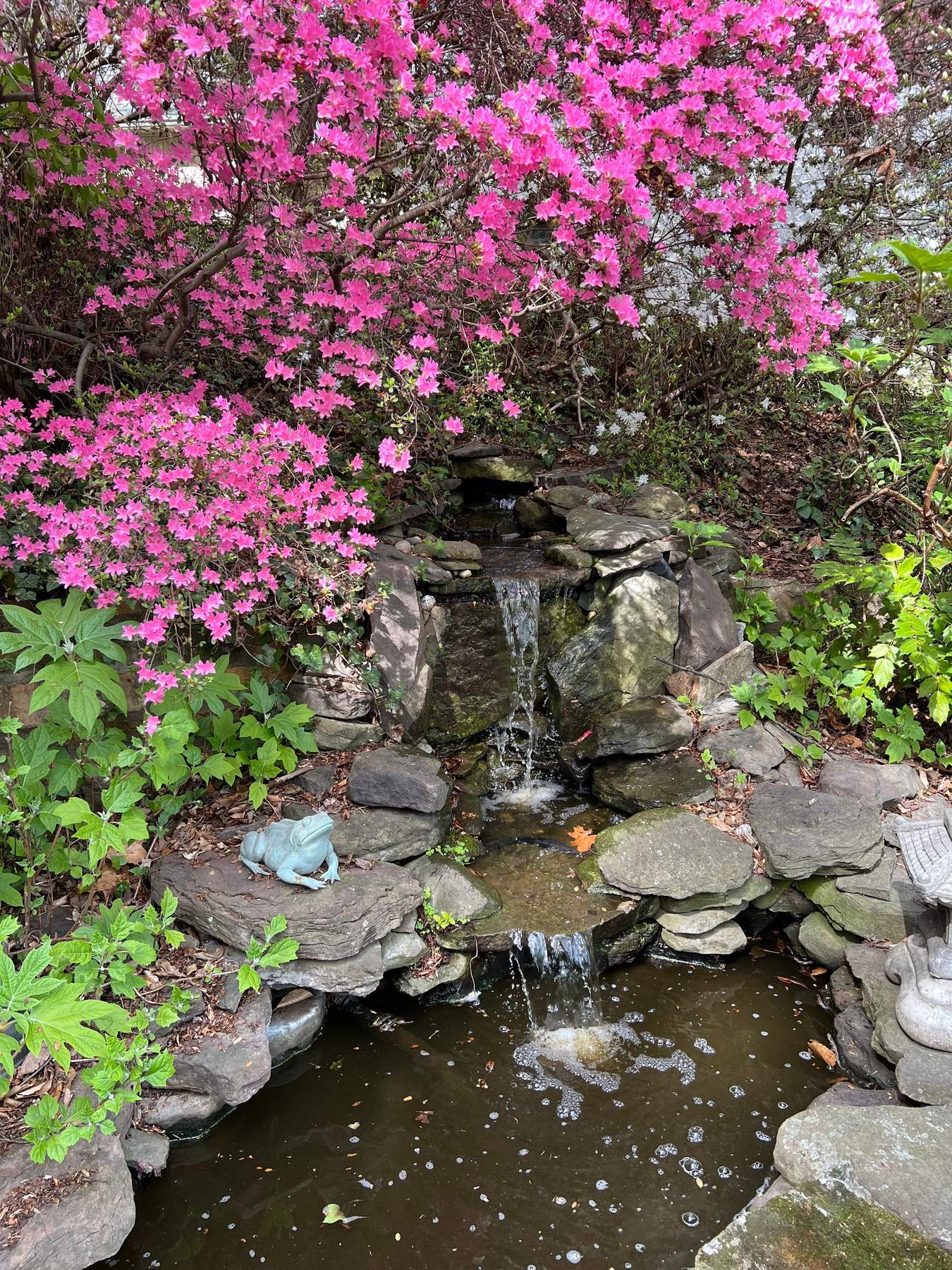
Anyone can stack rock and turn a pump on. What separates a good garden waterfall from an obvious one is stone selection, bedding and the shape of the lip that the water leaves from. We use local stone in matched sizes and colors so the fall looks like an outcrop the garden was built around, we bed and point every ledge so nothing shifts and nothing leaks behind the face, and we tune the flow and the lip on site with the water running until it sheets rather than dribbles. The engineering under it gets the same attention: liner properly lapped so water cannot track behind the stone, a reservoir sized for real evaporation, a pump matched to the head and the flow so it is not straining, and a service point that does not need the rockwork dismantled. We build for a Los Angeles summer, which means planning for evaporation and for what the wind does to a tall thin fall on an exposed hillside.
- Stone chosen and set for how the water behaves over it, tuned on site with the pump running.
- Liner lapped and stone pointed so water cannot track behind the face, the most common leak on a badly built fall.
- Pondless reservoirs sized for real summer evaporation and splash, with an autofill fitted.
- Pumps matched to actual head and flow, so the running cost is not a surprise on the first bill.
- Service access built in, so a pump swap never means taking a waterfall apart.
- Falls built as the aeration and biofilter head where they feed a pond build, rather than as decoration bolted on.
Reasons To Build A Waterfall
A fall gets built for the sound, the slope or the pond, and often all three:
You want to mask traffic noise
This is the most common reason in this city. Broadband water noise close to where you sit competes with distant road noise very effectively, and a fall placed near the patio beats one placed at the far end of the garden every time.
There is a slope doing nothing
Hillside lots in Los Feliz, Encino, La Cañada, the Palisades and the canyons are full of banks that are too steep to plant and too visible to ignore. A stream and a fall down that grade turn the problem into the feature.
You want water but not a pond
A pondless waterfall gives the sound and the movement with no open water: no barrier requirement, nothing to fall into, no fish, no algae balance and a fraction of the upkeep. It is the answer we give most often to families with young children.
The pond needs aeration
On a pond, the fall is the aerator and usually the head of the biological filter. Ponds with a good fall hold oxygen through a Los Angeles August far better than ponds with a fountain jet and nothing else.
The garden needs a focal point
A set-stone fall gives a garden somewhere to look, and it works from inside the house too, which is where most people see the yard from for most of the year.
You are already regrading
If a retaining wall, a new terrace or a hillside cut is going in anyway, building the fall into it while the machine is on site is far cheaper than adding one to finished landscaping later.
Send a photo of the slope or the wall you are thinking about and we will tell you what will fit and what it will sound like. Call: (818) 293-2214
How A Waterfall Gets Built
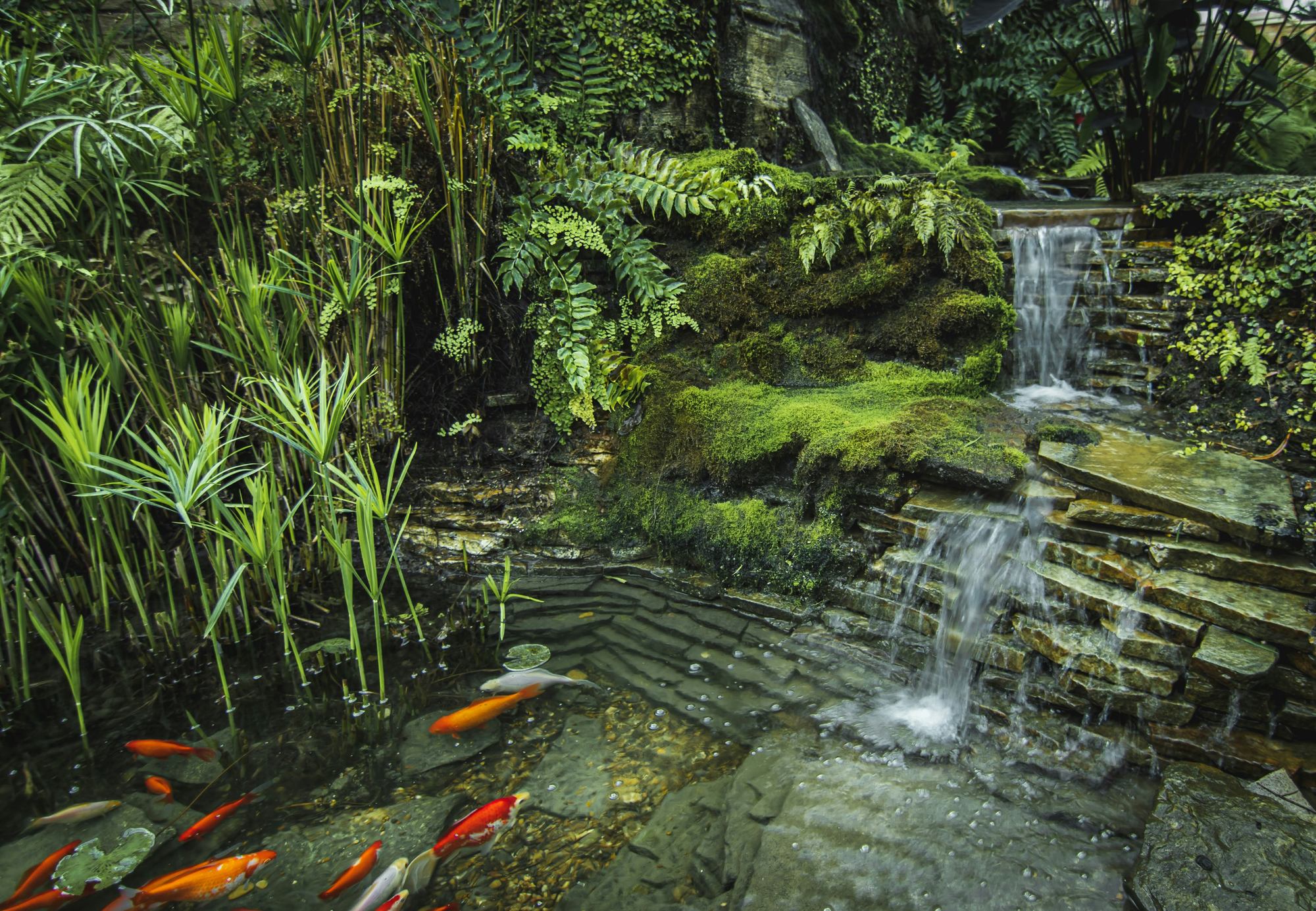
Grade, liner, stone, tune. Most falls are two days to a week.
1. Grade and design
We look at the fall available, where the water lands, where you will hear it from and where the pump and reservoir can sit. Height, width, number of drops and the shape of each lip get decided here, along with whether it is pondless or feeding a pond.
2. Excavation and reservoir
Cut the channel and the ledges, excavate for the basin or matrix modules at the bottom, and build the berm behind the fall if the grade needs one. Spoil from a pond dig usually becomes that berm, which is both cheaper and better looking than importing fill.
3. Liner and plumbing
Underlayment and EPDM up the channel and lapped correctly at every step so water cannot get behind the stone, return line run up the back, pump set on unions in the reservoir with a service hatch above it.
4. Stone setting
The slow part. Boulders bedded and leveled, ledge stones chosen for the lip they will make, gravel and cobble in the channel, everything pointed where it needs to hold water and left open where it should not. Machine-set on anything of size.
5. Fill, tune and finish
Water on, then hours of adjustment: shifting a lip stone an inch to make the sheet break properly, changing where the water splits, valving the flow to the sound you want, checking for anything tracking behind the face. Then planting into the margins so the stone is not sitting in bare ground.
Pondless Falls, Streams, Stone And Running Costs
The choices behind a waterfall quote:
Pondless waterfall
The fall and stream run into a buried reservoir covered with gravel, so there is never open water. No barrier requirement, no fish, no algae balance, low water use and maintenance that amounts to a pump screen and a leaf blower. It is the most popular waterfall we build in this city, particularly for families with small children.
Pond waterfall
A fall into an open pond, which aerates the water and normally houses the biofalls filter at the top. It does structural work in the pond system rather than just looking good, and a pond with a decent fall holds oxygen much better through a hot night than one without.
Streams
A stream is a waterfall stretched out: a length of set-stone channel falling gently with a few small drops in it. It costs by the foot and gives far more sound per gallon than a single tall drop, because there are more places for the water to break.
Stone selection
Everything depends on this. Matched local stone in a range of sizes, with a few large character boulders and enough smaller pieces to fill honestly, reads as an outcrop. Uniform stone from one pallet reads as a wall. Color matters as much as shape once the stone is wet.
Height, width and flow
Sound comes from drop and from how the water breaks, not from volume alone. A wide sheet needs a lot of flow to stay a sheet; a narrow split fall makes more noise from less water. Every extra foot of lift is pump energy forever, which is why the design and the running cost are the same conversation.
Pumps and running cost
A pump is sized to the flow you want at the actual head. A modern variable-speed pump on a typical back yard fall runs roughly $15 to $40 a month. Oversizing the pump to force a bigger fall is the most expensive mistake available here, because you pay for it every month for a decade.
Wind and splash
A tall thin fall on an exposed hillside or a windy canyon lot loses water sideways, and that shows up as a reservoir that empties fast. We plan the fall shape and the catchment around the site, and where wind is serious we build wider and lower rather than tall and narrow.
Lighting
Low-voltage light under a lip or grazing the stone face changes the fall completely after dark. Fitted during the build, since retrofitting a fixture into set and pointed stone means taking the face apart.
What A Waterfall Costs In Los Angeles
A small pondless fall runs about $6,000 to $12,000. A typical back yard fall with a short stream runs $12,000 to $30,000. Large hillside runs and multi-drop falls go from $35,000 upward. What drives it:
- Height and length. Both add liner, stone, labor and pump duty, and length adds more sound per dollar than height does.
- Stone. Boulders are sold by weight and set by machine, and the character stone is what makes the fall. It is the largest single material line.
- Reservoir size on a pondless build. A big fall needs a big buried basin, and undersizing it is the fault we get called out to most.
- Access. Getting stone and a machine into a back yard is the usual Los Angeles constraint, and craning over a house changes the number materially.
- Grade. An existing slope is cheap to work with. Building the grade first, with fill and a retaining structure, is a separate job under the fall.
- Pump and electrical. A new GFCI circuit to the reservoir, plus the right pump for the head, sized rather than guessed.
- Planting and lighting. Both are what stop a fall reading as a pile of rocks with a hose in it.
Quotes are flat-rate and include the liner, the reservoir, the pump, the electrical, the stone and the tuning. If the fall is going to feed open water, that is on the pond building page, and for a smaller or more formal answer see water features and fountains. All of it sits together on the Los Angeles pond and waterfall page.
Frequently Asked Questions
What is a pondless waterfall?
A waterfall and stream that run into a buried reservoir covered with gravel and cobble, so there is no open water anywhere. The pump sits in the reservoir under a service hatch and pushes water back to the top continuously. You get the sound and the movement of a stream with none of the pond ownership: no fish, no algae balance, no depth to trigger California barrier requirements, very little water use and maintenance that amounts to keeping leaves out and rinsing a pump screen. It is the most common waterfall we build in Los Angeles, and it is almost always the right answer where there are young children.
How much does a backyard waterfall cost?
A small pondless fall of three or four feet with a short stream runs about $6,000 to $12,000. A typical back yard feature with a stream of eight to fifteen feet, set boulders and lighting runs $12,000 to $30,000. Large hillside runs, multi-drop falls and anything needing a retaining structure or a crane start around $35,000 and go up from there. The stone and the access are the two biggest variables, which is why a fall of the same size can be priced very differently on two streets in the same neighborhood.
How loud is a waterfall?
Loud enough to mask traffic if it is placed near where you sit, and disappointing if it is at the far end of the garden. Sound comes from the drop height and from how many times the water breaks on the way down, more than from the volume of water. A two-foot fall splitting across three ledges makes more noise than a four-foot sheet. We valve the flow at commissioning so you can turn it down, and a lot of owners run theirs at half in the evening. On a bedroom-facing garden it is worth deciding this before the stone is set.
How much does it cost to run?
A modern variable-speed pump on a typical back yard waterfall costs roughly $15 to $40 a month in electricity at Los Angeles rates, running continuously. The number is driven by head, which is how high the water has to be lifted, and by flow. That is why an oversized pump chosen to force a bigger sheet is the expensive mistake in this trade: you pay for it every month for the life of the feature. Sizing the pump correctly to the fall, and using a variable-speed unit that can be dialled back, is worth more over ten years than almost any other decision on the quote.
Do I need a permit for a waterfall?
For a pondless waterfall, usually not, because there is no standing water over eighteen inches and therefore no barrier requirement. The electrical still needs a permit and a GFCI circuit. If the fall feeds an open pond, then the pond depth governs and the permit and barrier rules apply to the whole thing. On hillside lots, cutting or filling to build the grade can bring the grading ordinance into play regardless of the water. We work out which of those apply at quoting stage and file whatever the job needs.
Will a waterfall keep my pond clean?
It helps considerably and it is not a filter on its own. A fall aerates the water, which supports the bacteria doing the biological work and keeps oxygen up on hot nights, and the biofalls unit at the top of most falls is where that biological media actually lives. Circulation from the fall also stops dead zones forming. What it does not do is remove solids, which is the skimmer and the bottom drain, or clear suspended algae, which is the UV. A pond with a good fall and no mechanical filtration will still turn green.
Can you build a waterfall on a flat lot?
Yes, and most of Los Angeles is flat where the houses are. The grade gets built rather than found: the spoil from the pond or reservoir excavation becomes a berm behind the fall, planted so it reads as a rise in the garden rather than a mound with rocks on it. Three to four feet of built grade is straightforward and gives a genuinely good fall. Beyond that it starts wanting a retaining structure to look right, and at that point the honest conversation is whether a longer, lower stream would give more sound for the money.
What maintenance does a waterfall need?
On a pondless fall, very little: keep leaves out of the reservoir and off the stone, rinse the pump screen every month or two, top up for evaporation if there is no autofill, and once a year drain, wash the gravel and refill. String algae will grow on the wet stone in sunny spots and comes off with a brush or a suitable treatment. On a fall feeding a pond, the fall itself is easy and the pond is the thing with the schedule, which our pond maintenance visits cover.
Planning a pond in Los Angeles?
Tell us what the yard looks like and what you are imagining, and we will come back with a free estimate and a flat-rate price.
Or call us now: (818) 293-2214