Los Angeles · Pond & Water Feature Services
La Cañada Flintridge Pond Design
Foothill ponds, streams and drainage-aware water features for La Cañada Flintridge, built under the oaks and below the burn scars.
La Cañada Flintridge · Pond & Water Feature Services
Foothill Ground, Debris Flow And Old Oaks
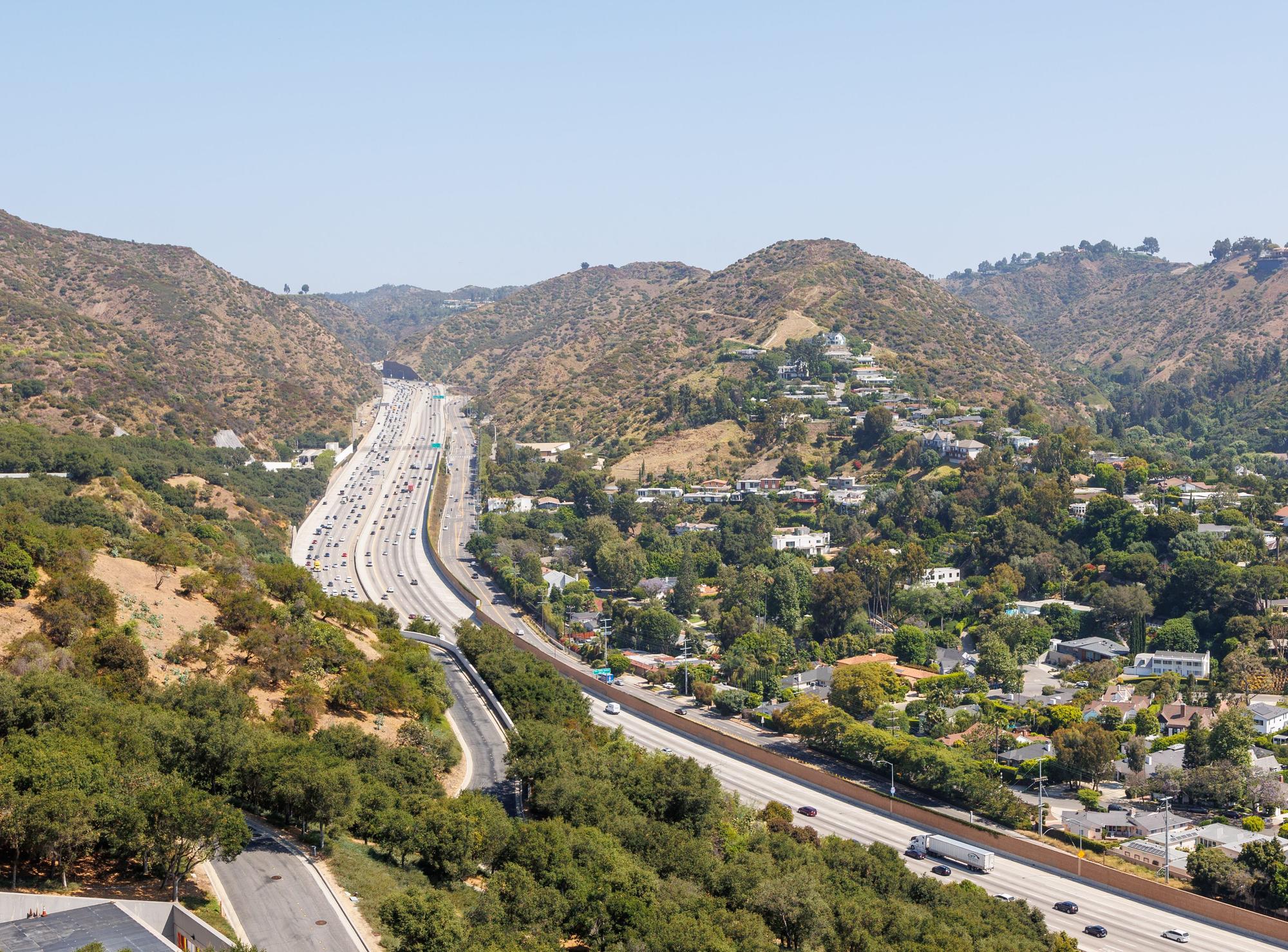
La Cañada Flintridge sits on the alluvial fan at the foot of the San Gabriels, and the ground tells you exactly what has been happening here for millennia. Decomposed granite and cobble washed down out of the mountains makes for a fast, clean dig and excellent drainage, and it is also a reminder that this is where mountain water goes. Any pond on these streets gets sited with the drainage path in mind, because a feature placed in the way of where water already runs is a feature that fills with sediment.
That is not theoretical. The foothill communities below the Angeles National Forest have a long history of debris flow after fire, and the county maintains debris basins above these neighborhoods for exactly that reason. On properties high on the fan we plan the grading around it, keep the pond out of the natural flow line, and where a property has a genuine drainage problem the sensible build is a retention basin that holds and slows the water rather than an ornamental pond that catches it.
The oaks are the other defining feature. Coast live oaks are protected here and the mature specimens on these lots are the reason the gardens look the way they do. Excavation and trenching get planned around the root plates rather than through them, and their fine, relentless leaf drop means the skimmer goes where the drift takes it and netting from October is part of the pond maintenance routine rather than an optional extra.
The gardens here have a real horticultural tradition, with Descanso Gardens down the road setting a standard a lot of properties quietly follow. Shaded, mature, oak-canopied gardens are ideal pond conditions: less light means less algae pressure, cooler water and a planted pond build that holds clarity with far less intervention than the same pond in the open Valley. Serious koi ponds do well here too, with the summers hot enough to need depth and aeration but the canopy taking the edge off.
Grade is available on most of these lots, so streams and set-stone waterfalls come naturally and do not need a berm manufactured for them. The city applies its own review and the hillside standards apply to the excavation, deer come down out of the forest to any water they can reach, and herons work the arroyo. All three get designed for rather than discovered, which is the difference between a pond that settles into a foothill garden and one that fights it.
What We Build In La Cañada Flintridge
The full range of pond and water feature work we do in La Cañada Flintridge and across Los Angeles County.
Pond Building
Custom ponds dug, lined, plumbed, planted and started up, from a small garden pond to a quarter-acre of open water.
Pond Maintenance
Scheduled service, spring cleanouts, filter and pump work, algae control and repairs, on ponds we built and ponds we inherited.
Koi Ponds
Ponds built around the fish: four to five feet deep, bottom drain, settlement, real turnover and a filter that keeps ammonia at zero.
Swimming Ponds
Natural swimming ponds with a clean swim zone and a planted regeneration zone doing the filtering. No chlorine, no salt, no red eyes.
Retention Ponds
Detention and retention basins for commercial sites, HOAs, golf courses and large parcels, built to hold, infiltrate and pass stormwater properly.
Water Features
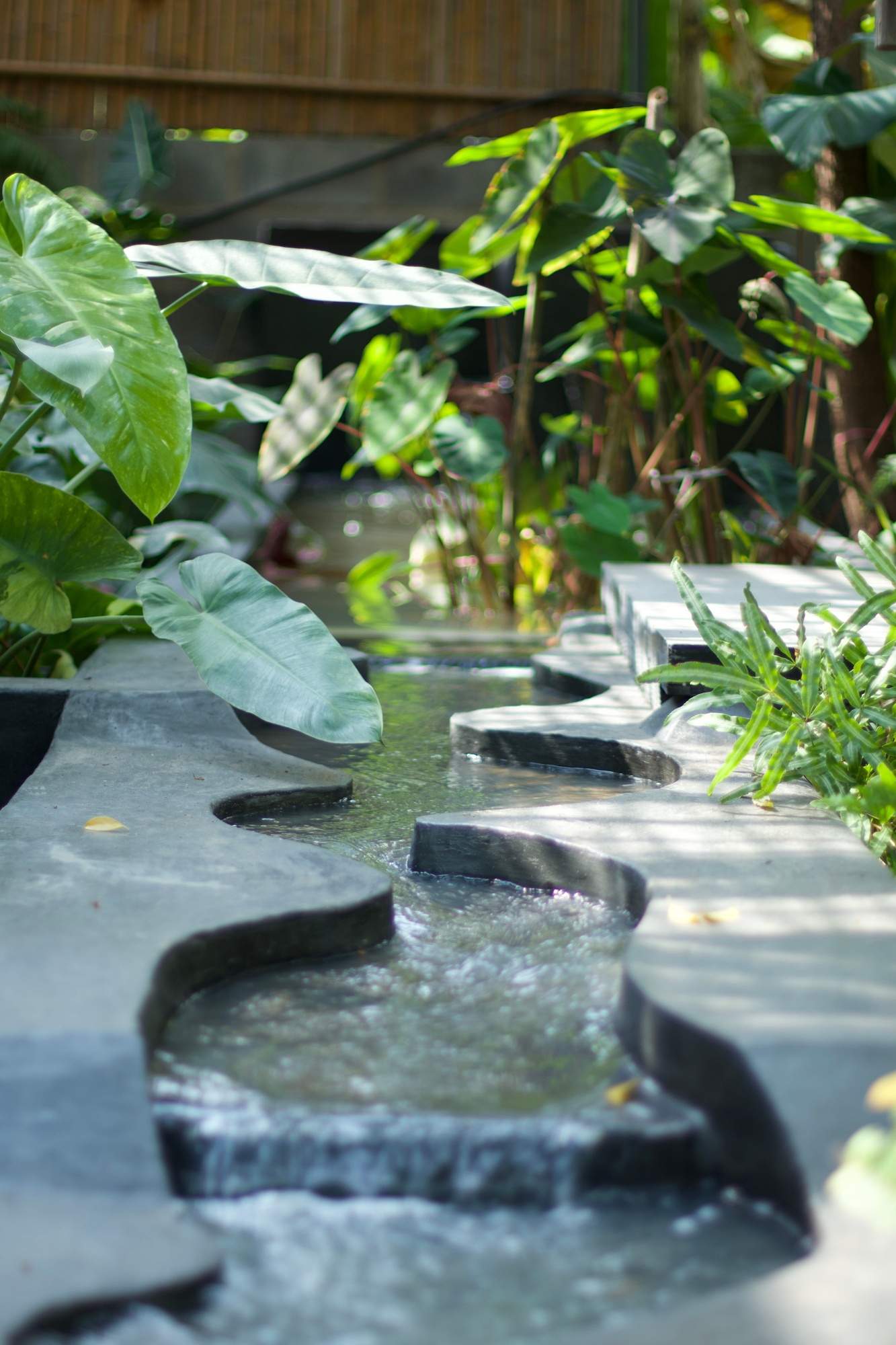
Streams, rills, spillway bowls, basalt columns, urns and wall spouts, built and plumbed as part of the landscape.
Waterfalls
Backyard cascades in set stone, pondless or falling into a pond, from a two-foot garden fall to a hillside run.
Fountains
Tiered, wall, jet and disappearing fountains set, plumbed and wired, plus repairs and descaling on the ones already in the garden.
Every dig in La Cañada Flintridge is run by the same people and the same drawings as the rest of pond design and maintenance countywide, which is why a pond here is specified no differently from one twenty miles away. Call: (818) 293-2214
Frequently Asked Questions
How much does a pond cost to build?
It depends on what you are building. A small garden pond starts around $5,000. The common Los Angeles back yard pond with a stream and a waterfall runs $12,000 to $35,000. A koi system with a bottom drain, settlement and filtration sized for large fish runs $25,000 to $50,000 and beyond. Natural swimming ponds start around $80,000 and estate work goes past $100,000. At the other end, a pondless waterfall starts near $6,000 and a courtyard fountain can be under $4,000 installed. The three things that move a price most are depth, access to the back yard and how much stone is in it.
How long does it take to build?
On site, a self-contained fountain or a small pondless feature takes two days. A typical back yard pond with a stream is one to two weeks. Koi systems, swimming ponds and anything with structural walls or hillside grading run three to six weeks. In front of that, allow two to four weeks for design and permitting in the City of Los Angeles, longer if grading review is involved. After the water goes in, the biology needs another four to six weeks to settle, which is why we come back rather than handing over on fill day.
Do I need a permit to build a pond?
Usually. California treats water deeper than eighteen inches as a pool for safety purposes, so anything past that depth brings barrier requirements and a permit through LA Building and Safety. The pump circuit needs an electrical permit and a GFCI either way. On a slope, the hillside grading ordinance applies to the excavation. Shallow water gardens under eighteen inches, pondless waterfalls and disappearing fountains normally avoid the depth rules entirely, which is a genuine reason to consider them. We file whatever the job needs and hand over the signed card.
Which part of the yard should it go in?
Somewhere you can see it from indoors, with four to six hours of sun rather than all-day sun, out from under the drip line of a large deciduous tree, and never at the low point where the yard already drains. Full sun in the Valley pushes algae and evaporation hard; deep shade limits what will grow. Keep clear of big roots, keep clear of a septic field on the properties that have one, and stay close enough to power for a proper circuit. We walk this before drawing anything, because moving a pond on a plan costs nothing.
What kinds of ponds do you build?
Six, broadly. Planted water gardens built around lilies and marginals with a light fish load. Koi ponds built around the fish, with depth, drains and heavy filtration. Natural swimming ponds with a planted regeneration zone doing the filtering instead of chlorine. Pondless waterfalls and streams with the reservoir buried and no open water. Farm, duck and natural ponds on the larger parcels, with beach entries rather than coping. And retention and detention basins for commercial sites, HOAs and golf courses. Fountains and courtyard features sit alongside all of it.
Koi pond or water garden: which do I actually want?
Priorities. A water garden is built for plants: one to two feet deep, densely planted, lightly stocked, and filtered modestly because the planting does much of the work. A koi pond is built for fish: three to five feet deep, with a bottom drain, a settlement chamber, heavy biological filtration, high turnover, continuous aeration and sparse planting, since koi eat and uproot it. Water gardens cost less and forgive more. Koi ponds keep large fish healthy for decades. Most of the problems we get called about are koi living in a water garden.
Can I have moving water without owning a pond?
A waterfall and stream that run into a gravel-covered reservoir instead of into open water, so there is nothing standing anywhere. The pump sits in the reservoir under a service hatch and recirculates continuously. You get the sound and the movement without owning a pond: no fish, no algae balance, no depth to trigger barrier requirements, very little water use, and maintenance that amounts to keeping leaves out and rinsing a pump screen. It is the build we recommend most often for families with young children and for small or steep gardens.
Can you swim in a pond instead of a pool?
A swimming body of water kept clear by biology rather than chemistry. A deep, unplanted swim zone is paired with a shallow gravel bed planted with reeds and rushes, and water circulates slowly between them. Bacteria on the gravel and roots take up the nutrients algae would otherwise use. No chlorine, no salt, nothing to test or balance. The trade is footprint, because the planted zone runs a third to half the total water area, so swim ponds need a yard that can carry them. In Los Angeles they swim comfortably from late spring into October.
Can I keep fish, and how many?
Yes, and the number is set by adult size rather than the size they arrive at. Goldfish, shubunkins and orfe suit a planted pond of two feet or more and stay small enough that a modest pond carries a decent group. Koi are a different animal: plan on 250 gallons per adult fish, or 500 for large or show-grade specimens, so a 2,000-gallon pond holds around eight adults comfortably. The near-universal mistake is stocking to the fish you buy, then finding that a 6-inch koi becomes a 24-inch koi and the filter never grew with it.
Does keeping koi mean digging deeper?
Three feet minimum, four to five feet recommended, six worth having on a large build. Depth stabilises temperature through a Los Angeles summer, gives fish a refuge no wading bird can reach, and gives koi the water column to develop proper body shape instead of staying stunted. It has a code consequence as well, since anything over eighteen inches is treated as a pool for barrier purposes. Depth is also the one thing that cannot be added later without emptying and re-lining the pond, so it is worth being decisive about at design stage.
How do I protect fish from herons and raccoons?
Build the defense in. Three feet or more of depth with steep sides means a heron cannot wade, and a fish cave, shelf overhang or length of wide pipe on the bottom gives the fish somewhere to go. Raccoons work the shallow margins at night, so avoid a gentle shelf all the way round. On top of that, netting through spring and autumn is the only complete answer, and a motion-activated sprinkler is unexpectedly effective. Great blue herons are common along the LA River, Ballona Creek and the Sepulveda Basin, so this is a local problem rather than a theoretical one.
What filtration does a pond need?
Three stages. Mechanical removes solids before they break down, which means a surface skimmer and, on fish ponds, a bottom drain feeding a settlement chamber. Biological converts ammonia to nitrite and nitrite to nitrate on media with enough surface area and slow enough flow to give the bacteria contact time. Ultraviolet kills suspended algae and is worth having on any sunny pond in this city. Alongside those, the whole volume should turn over about once an hour, twice on a heavy koi load. A plant-led water garden needs far less of all of it than a koi pond does.
Why does pond water turn green?
Because light and nutrient exceed what the plants and the filter can absorb. The usual causes are a new pond that has not cycled, too many fish, overfeeding, not enough plant coverage, an undersized filter or full afternoon sun. A correctly sized ultraviolet clarifier clears suspended green water in a few days, but that treats the symptom. The lasting fix is surface shade from lilies, more marginal planting, less food, an honest look at the fish count and filtration that matches the volume. String algae, the hair-like growth on rocks and falls, is a separate problem and ultraviolet does nothing to it.
Does the pump have to run all the time?
On any pond with fish, yes. The biological filter is a living bacteria colony that needs continuous oxygenated flow and starts dying within hours of the pump stopping, which is why ponds switched off at night crash a few days later. Circulation also keeps oxygen in the water through a hot Los Angeles night and stops mosquitoes finding still water to breed in. A modern energy-efficient pump on a typical back yard pond costs roughly $15 to $40 a month at local rates. If the waterfall carries into a bedroom, valve the flow back at night rather than switching it off.
Can you build in clay, rocky or sandy soil?
All three, with different adjustments. Valley and Baldwin Hills clay holds water behind a liner, so the excavation gets a drainage layer and a sump, and its expansiveness is one reason we use flexible EPDM rather than rigid concrete. Foothill decomposed granite and cobble dig fast and drain well, though large rock slows a dig and occasionally changes the shape. Beach-city sand cuts easily but will not hold a vertical face, so excavations get battered back or shored. We check which one your street sits on before quoting rather than after.
What liner do you use?
45-mil EPDM rubber over 8oz geotextile underlayment on almost everything. It stays flexible through heat and ground movement, takes any shape, is patched in place rather than replaced, and routinely outlasts its twenty-year warranty. Concrete and shotcrete suit formal pools, raised walls and structural work, and they need proper waterproofing since they crack on expansive soil otherwise. Preformed plastic shells are cheap and small, awkward to edge convincingly, and brittle within a decade in this climate. We do not install them.
What maintenance does a pond need?
Weekly there is about five minutes of owner work: check the level, glance in the skimmer basket, look at the fish and feed sensibly. Monthly a professional visit covers filter media, pump check, water testing, bacteria dosing and plant work. Annually the pond wants a full cleanout with the fish held safely and the sediment taken off the bottom, usually in late winter. Seasonally, the big one in Los Angeles is netting from October through leaf fall, which does more for the following summer than anything else on the list.
Will a pond add value to my property?
A well-built and well-kept water feature is treated by appraisers much as any quality hardscape is, and landscape industry surveys have long put good landscaping at roughly five to twelve percent of home value. In this city the effect is strongest where the lot is small and the street is loud, because a pond changes how the outdoor space gets used rather than only how it looks. The qualifier is real: a neglected green pond with a cracked shell reads to a buyer as a job they will have to deal with, which is an argument for building it properly and keeping it serviced.
Planning a pond in Los Angeles?
Tell us what the yard looks like and what you are imagining, and we will come back with a free estimate and a flat-rate price.
Or call us now: (818) 293-2214