Los Angeles · Pond & Water Feature Services
Retention Ponds
Detention and retention basins for commercial sites, HOAs, golf courses and large parcels, built to hold, infiltrate and pass stormwater properly.
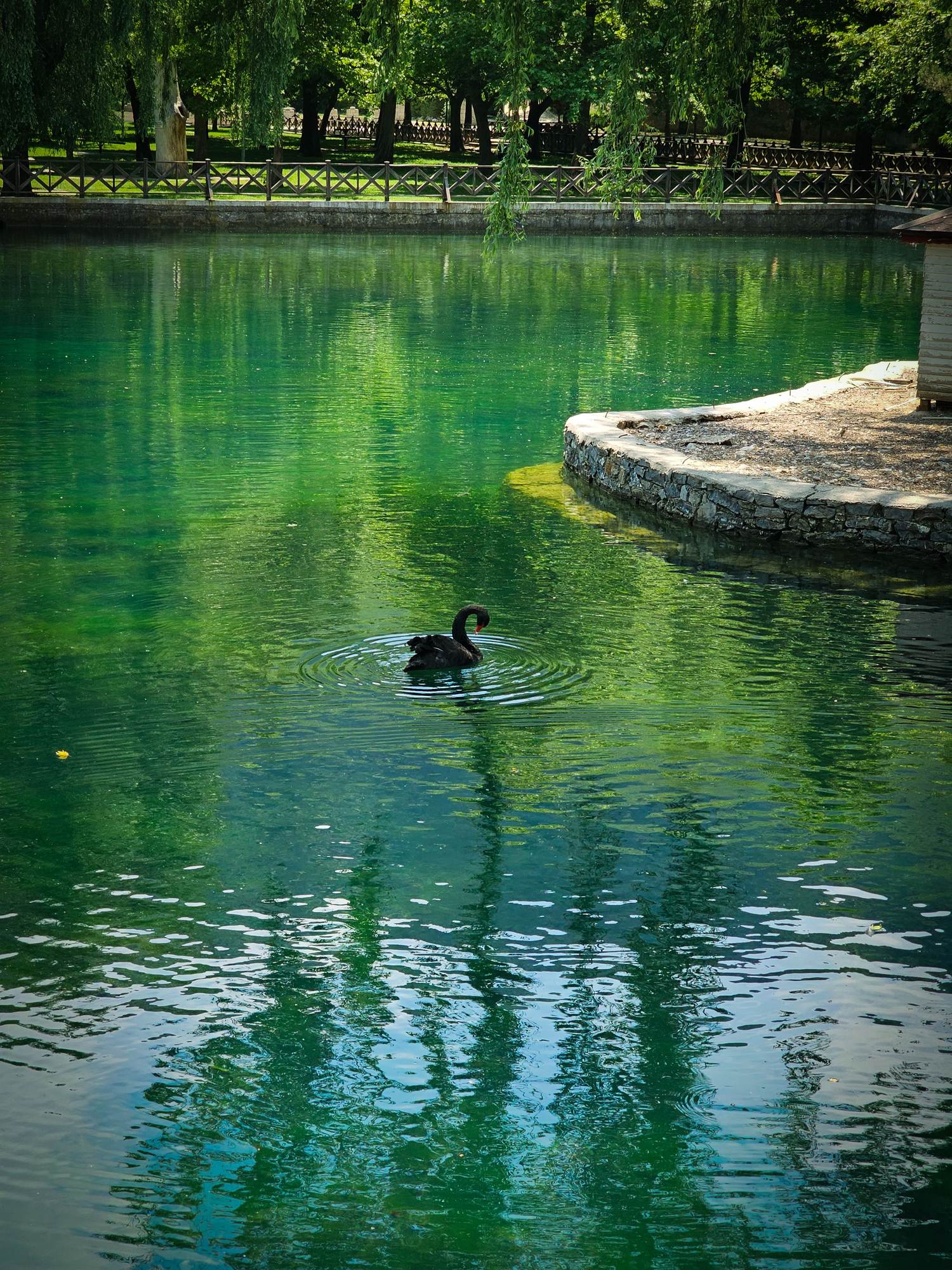
Retention Ponds · Los Angeles
What A Retention Pond Does
A retention pond holds stormwater permanently and lets it infiltrate or evaporate. A detention basin holds it temporarily and releases it slowly through a controlled outlet so the downstream storm drain is not hit with everything at once. Both exist because a developed site sheds far more water, far faster, than the ground it replaced, and in Los Angeles County that is a regulatory matter rather than a preference: the Low Impact Development ordinance requires new development and significant redevelopment to manage stormwater on site rather than pushing it to the street. Which shape a project needs comes out of the drainage report, and what we build is the physical thing the report describes: the excavation, the grading and slopes, the forebay that catches sediment before it reaches the main basin, the inlet and outlet structures, the overflow, the erosion protection and the planting that holds the banks and does the biological work. On golf courses and larger parcels the same basin usually doubles as an irrigation reservoir and a landscape feature, which is where the pond building side of what we do meets the civil side.
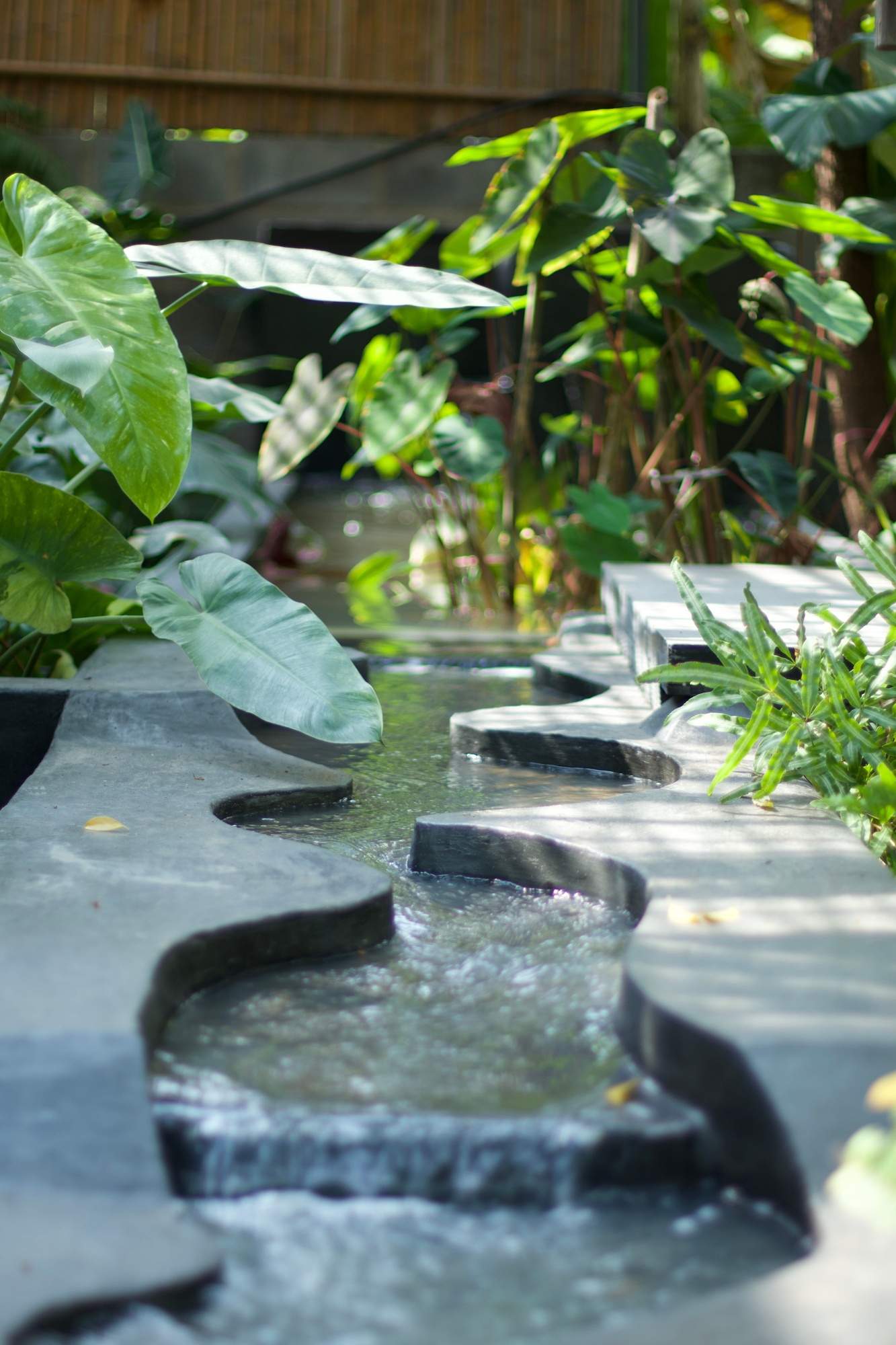
Why Go With Us For Basin Work
Stormwater basins get built by grading contractors who treat them as a hole with a pipe, and they get maintained by nobody until an inspection fails. The parts that decide whether a basin keeps working are the parts nobody photographs: whether the forebay actually captures sediment where it can be dug out, whether the side slopes are stable and mowable, whether the outlet can be cleared without a crane, and whether the planting holds the banks through the first serious storm. We build basins that are maintainable, we plant them with species that survive both a Los Angeles summer and a February inundation, and we take on the ones that have silted in, eroded or grown into an impenetrable thicket. Because the same crew builds ornamental water, a basin on a visible site can be finished to look like part of the landscape rather than a fenced-off pit, which on HOA and campus projects is usually the difference between an approval and an argument.
- Built to what the civil drawings and the drainage report actually specify, with the volumes and elevations checked rather than assumed.
- Forebay and sediment capture designed so the basin can be cleaned out with a machine instead of by hand.
- Side slopes graded to be stable, safe and maintainable, with erosion protection at the inlet and outlet.
- Planted with species that take both a dry Los Angeles summer and a week of standing water in February.
- Retrofits and restorations on silted, eroded or overgrown basins, including the ones that have failed an inspection.
- Amenity finishing where the basin is visible, using the same rockwork and planting as our pond building work.
Reasons To Build A Retention Pond
Basins get built for compliance, for damage control, and occasionally because somebody wants the water:
The project has to meet LID requirements
Los Angeles County and the City both require stormwater to be managed on site for new development and significant redevelopment. If the civil drawings show a basin, the basin has to exist, hold the specified volume and pass inspection before the project closes out.
The site floods where it should not
Parking lots that sheet water into a loading dock, private drives that turn into a creek, campus lawns that stay saturated for days. A properly placed basin and the grading to get water into it fixes the symptom and the cause together.
The existing basin has silted in
Basins fill up. Sediment arrives every storm, and after a decade a basin that was sized for a design storm holds a fraction of it. Restoring capacity is a dig and a forebay redesign, and it is far cheaper than being told to build a new one.
Erosion is taking the banks
Unprotected inlets and steep unplanted slopes fail in the first heavy year. Rock at the inlet, correct slope grading and deep-rooted planting stop it, and re-grading after the fact costs more than doing it right.
A golf course needs water and a hazard
Course ponds do three jobs at once: they hold stormwater, they store irrigation water, and they are part of the playing surface. Building all three intentions into one basin is a different design conversation from a purely civil one.
The basin is the first thing people see
On an HOA entry, a campus quad or a hotel frontage, a bare fenced basin is a problem in itself. The same holding volume can be built as planted, rock-edged water that reads as a landscape feature and still passes the drainage inspection.
Send us the civil drawings or the inspection notice and we will price the work off what the documents actually require. Call: (818) 293-2214
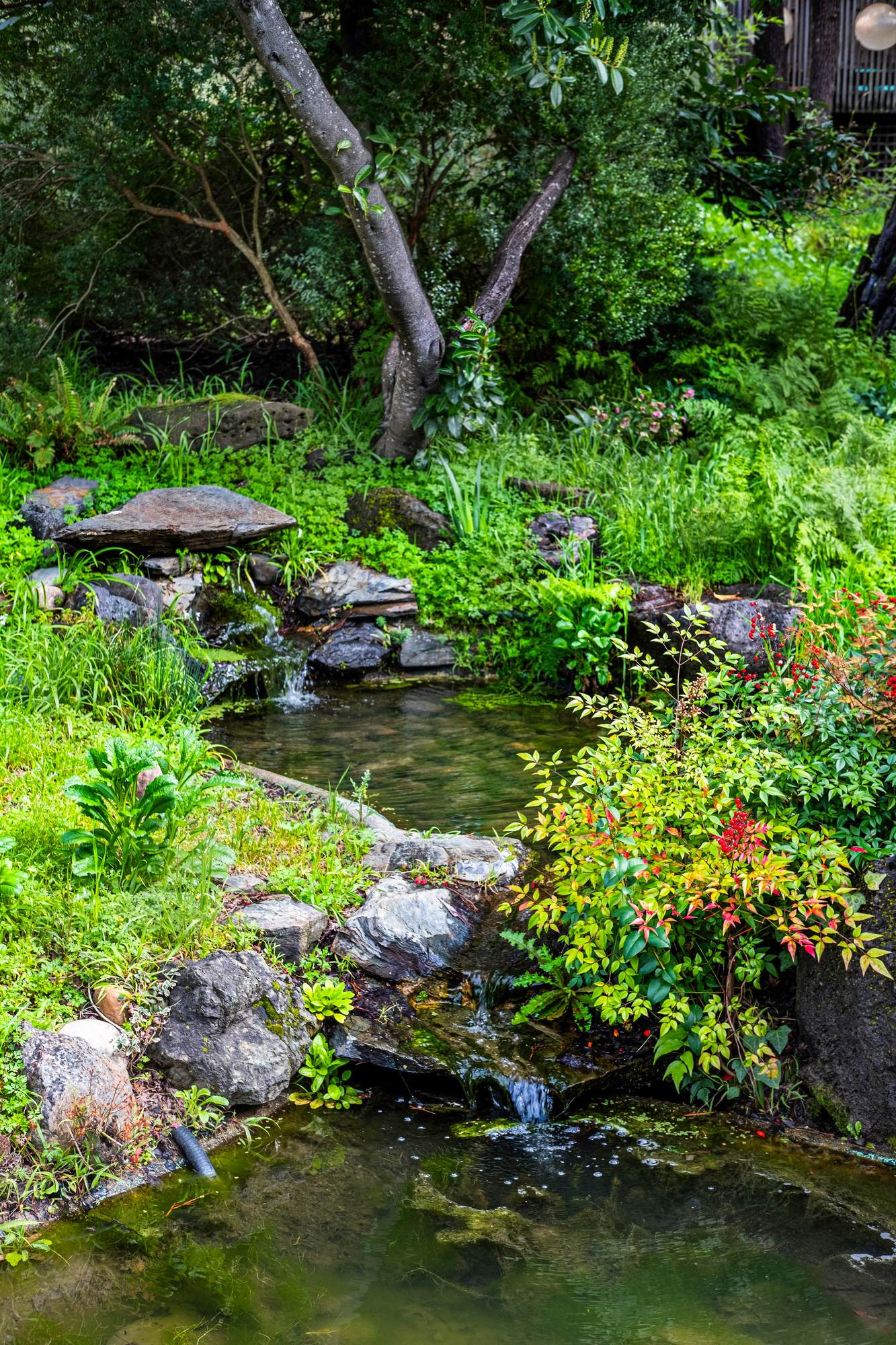
How Basin Work Runs
Off the drawings, through the dig, into the planting, with the maintenance access built in.
1. Drawings, volumes and site walk
We start from the civil set and the drainage report: required volume, infiltration rate, outlet sizing, freeboard and elevations. Then we walk the site and check what is actually there, because existing grade and existing utilities are where most basin projects find their surprises.
2. Permits, erosion control and staging
Grading permit, erosion and sediment control for the construction period, and a staging plan that keeps the site working. On a live property this is most of the scheduling problem, and it is worth solving before the machine arrives.
3. Excavation, grading and structures
Bulk excavation to the design elevations, side slopes cut and compacted, forebay formed, inlet and outlet structures set, overflow built and rock protection placed where the water enters and leaves. Elevations get verified rather than eyeballed.
4. Liner or infiltration base
A retention basin meant to infiltrate needs its base left permeable and protected from compaction and clogging. One meant to hold water permanently gets lined. Which one the project needs comes from the soils and the drainage report, and the two are built very differently.
5. Planting, stabilisation and handover
Bank planting and erosion matting, wetland species on the wet bench if there is one, and a maintenance plan that says who digs the forebay out, how often, and how a machine gets to it. Then the inspection.
Detention, Infiltration, Golf Course Water And Upkeep
The distinctions that matter on a stormwater project:
Detention pond
Holds a storm temporarily and lets it out slowly through a restricted outlet, so peak flow downstream is cut even though total volume is not. Usually dry between storms, which makes it usable as open space. The outlet control structure is the whole design, and it is the thing that clogs if the forebay is not doing its job.
Retention basin
Holds water permanently, losing it to infiltration and evaporation rather than to a pipe. Needs soil that will actually take water, which in parts of Los Angeles it will not, and needs its base protected from the fine sediment that seals an infiltration surface over time.
Stormwater pond and water quality
A basin does more than hold volume. Slowing water lets sediment settle and lets plants and soil biology take up nutrient and break down hydrocarbons off the parking lot. That treatment function is why the forebay, the residence time and the planting all appear in the drawings rather than just the volume.
Golf course ponds
Courses use ponds as hazards, irrigation storage and stormwater management at once. That means a permanent water level, an aeration plan so it does not turn anaerobic in August, edge treatment that survives mowers and carts, and a pump house. Restoring a silted, weedy course pond is a large share of the golf work we do.
Forebay and sediment management
A forebay is a small chamber at the inlet where the heavy sediment drops out where a machine can reach it. It is the single cheapest feature to build and the single most expensive to omit, because without one the sediment spreads across the whole basin floor and the cleanout becomes a full excavation.
Slope stability and erosion control
Side slopes are graded to be stable and safe to walk and mow, rock protection goes where water enters and leaves, and deep-rooted planting holds the surface. In this climate the danger window is a dry summer followed by the first heavy winter storm, on a slope that has not established.
Planting for wet and dry
Basin planting has to survive months with no water and then a week standing in it. Native rushes, sedges, mulefat and deergrass do that; ornamental planting mostly does not. Getting this wrong means replanting the banks every couple of years.
Inspection and ongoing maintenance
Basins are inspected, and the common findings are a forebay never cleaned out, an outlet blocked, banks eroded or vegetation grown into the flow path. All of it is routine work if somebody is scheduled to do it, and all of it becomes a capital project if nobody is.
What Retention Pond Work Costs
Basin work is priced from the drawings rather than by the gallon. Small residential and HOA basins commonly run $20,000 to $60,000; commercial and golf course projects run from six figures. What drives it:
- Volume of excavation and where the spoil goes. On a constrained Los Angeles site the export is often the largest line on the job.
- Lined or infiltrating. A permanently wet basin needs a liner and an inlet detail; an infiltration basin needs its base protected and its soils verified.
- Inlet, outlet and overflow structures. Concrete work, grates, orifice plates and rock protection are engineered items rather than allowances.
- Slope grading and stabilisation. Long, steep banks cost more to cut, compact, protect and plant than short shallow ones.
- Planting and establishment. Wet-and-dry planting on a large bank is a real budget, and skimping shows up as erosion in the first wet winter.
- Access for maintenance. A ramp and a hardstand so a machine can reach the forebay costs a little now and saves a great deal every cleanout.
- Restoration scope. On an existing basin, the price depends almost entirely on how much sediment is in it and how badly the banks have gone.
Send the civil set or the inspection notice and we will price the work against it. Where a basin is visible enough to matter, we finish it with the same stone and planting we use on pond building and add a waterfall or an aerating feature so it reads as landscape. Everything we build across the county is listed on the Los Angeles pond and water feature page.
Frequently Asked Questions
What is the difference between a retention pond and a detention basin?
A retention pond holds water permanently and loses it to infiltration and evaporation, so there is a standing water level between storms. A detention basin holds a storm temporarily and releases it slowly through a restricted outlet, so it is usually dry in between and the open space can be used for something else. Retention needs soil that will take water and is the better answer where groundwater recharge is a goal. Detention is about cutting peak flow to the storm drain. Which one a site needs comes out of the drainage report and the soils, not out of preference.
Do I need a retention basin for my project?
If the project is new development or significant redevelopment in Los Angeles County, some form of on-site stormwater management is very likely required under the Low Impact Development ordinance, and the civil engineer will have shown it on the drawings. That might be a basin, or it might be bioswales, permeable paving, dry wells or a combination. What we can tell you is what the shown solution costs to build and whether the site conditions actually support it, particularly the infiltration assumption, which is the item most often taken from a table rather than from a test pit.
How often does a retention pond need maintenance?
Inspect after every significant storm and at least quarterly. Clean out the forebay when it is a third full, which on a site with disturbed ground upstream can be annually and on a settled site every few years. Keep the outlet structure and the trash rack clear, that being the most common cause of a basin backing up. Mow or cut back the banks once or twice a year, keeping vegetation out of the flow path but leaving the deep-rooted planting that holds the slopes. Once a decade or so, expect a full sediment removal to restore design volume.
Can a stormwater basin look like a pond?
Yes, and on visible sites it should. A basin that holds a permanent pool can be built with a proper edge, set stone, aeration and planted margins, and read as an amenity while still doing its hydraulic job. The constraints are real: the design volume, the freeboard, the outlet and the maintenance access all have to survive the makeover, and the planting has to tolerate inundation. But the alternative, a bare fenced hole at the front of a property, is a design failure rather than a requirement, and it is usually the version an HOA board is unhappy about.
Why has my basin stopped holding as much water as it used to?
Sediment. Every storm delivers material into the basin, and if there is no forebay to catch it where it can be dug out, it spreads across the floor and quietly eats the design volume. On infiltration basins the same fine sediment seals the base and the infiltration rate collapses, so the basin holds water for days when it used to drain in hours. Both are fixable: remove the accumulated material, restore the elevations, rebuild or add a forebay, and where infiltration has sealed, scarify and reinstate the permeable base.
Do you do golf course pond work?
Yes. Course ponds usually serve as hazards, irrigation storage and stormwater management at the same time, and the work ranges from building new water into a redesign to restoring ponds that have silted up, lost their banks or gone anaerobic and started smelling in late summer. The common package is dredging or sediment removal, edge and bank rebuilding, aeration to keep the water column turned over, liner repair where there is one, and planting that survives both carts and inundation. We work around play schedules, which on a live course is most of the planning.
Will a retention pond breed mosquitoes?
A well-designed one does not, and a neglected one does. The problem is water that sits still for more than a few days without predators, which is exactly what a detention basin with a partially blocked outlet produces. The answers are a functioning outlet so the basin drains in the design time, aeration or circulation on permanently wet basins, planting and edge conditions that support dragonflies and other predators, and mosquitofish where there is a permanent pool. The Greater Los Angeles County Vector Control District takes complaints about standing water on private property seriously, which is another reason the outlet is worth keeping clear.
How long does it take to build one?
A small residential or HOA basin is usually one to two weeks on site. A commercial basin with concrete inlet and outlet structures, engineered slopes and full planting runs four to ten weeks depending on the volume and how much spoil has to leave. Golf course restoration depends far more on access and play schedule than on the excavation itself. The permitting and drainage review in front of the work typically runs longer than the construction, so the useful thing to know early is where the project sits in that queue.
Planning a pond in Los Angeles?
Tell us what the yard looks like and what you are imagining, and we will come back with a free estimate and a flat-rate price.
Or call us now: (818) 293-2214