Los Angeles · Pond & Water Feature Services
Koi Ponds
Ponds built around the fish: four to five feet deep, bottom drain, settlement, real turnover and a filter that keeps ammonia at zero.
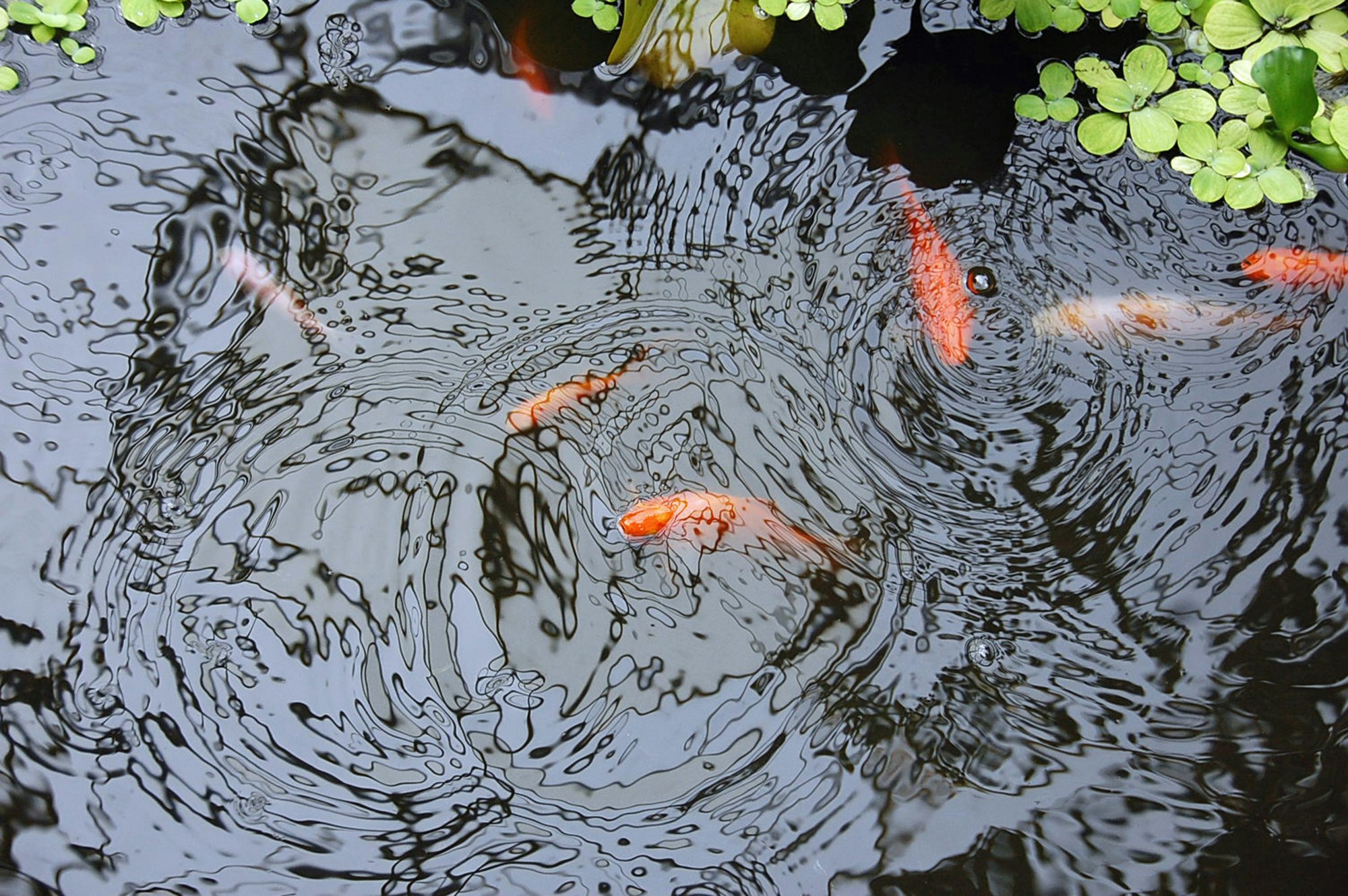
Koi Ponds · Los Angeles
What Makes A Koi Pond Different
A koi pond is a fish-keeping system with landscaping around it, and that ordering is the whole difference. Koi grow to two feet and beyond, they eat heavily, and they produce far more waste per gallon than any other fish people put in a garden. So the specification is not decoration: four to five feet of depth so they have thermal stability and somewhere to escape a heron, a bottom drain at the low point so solids leave rather than settle, a settlement chamber or vortex to take those solids out of the water before the biological stage, a biofilter sized to the fish load rather than the volume, aeration that keeps oxygen up through a Los Angeles August night, and enough turnover to move the whole pond once or twice an hour. Koi pond construction done properly costs more than the same-size water garden and is far cheaper than retrofitting a garden pond into one after the fish have grown. If the fish are more of a nice-to-have than the point, a planted pond build with a light goldfish load is the sensible call and we will say so.
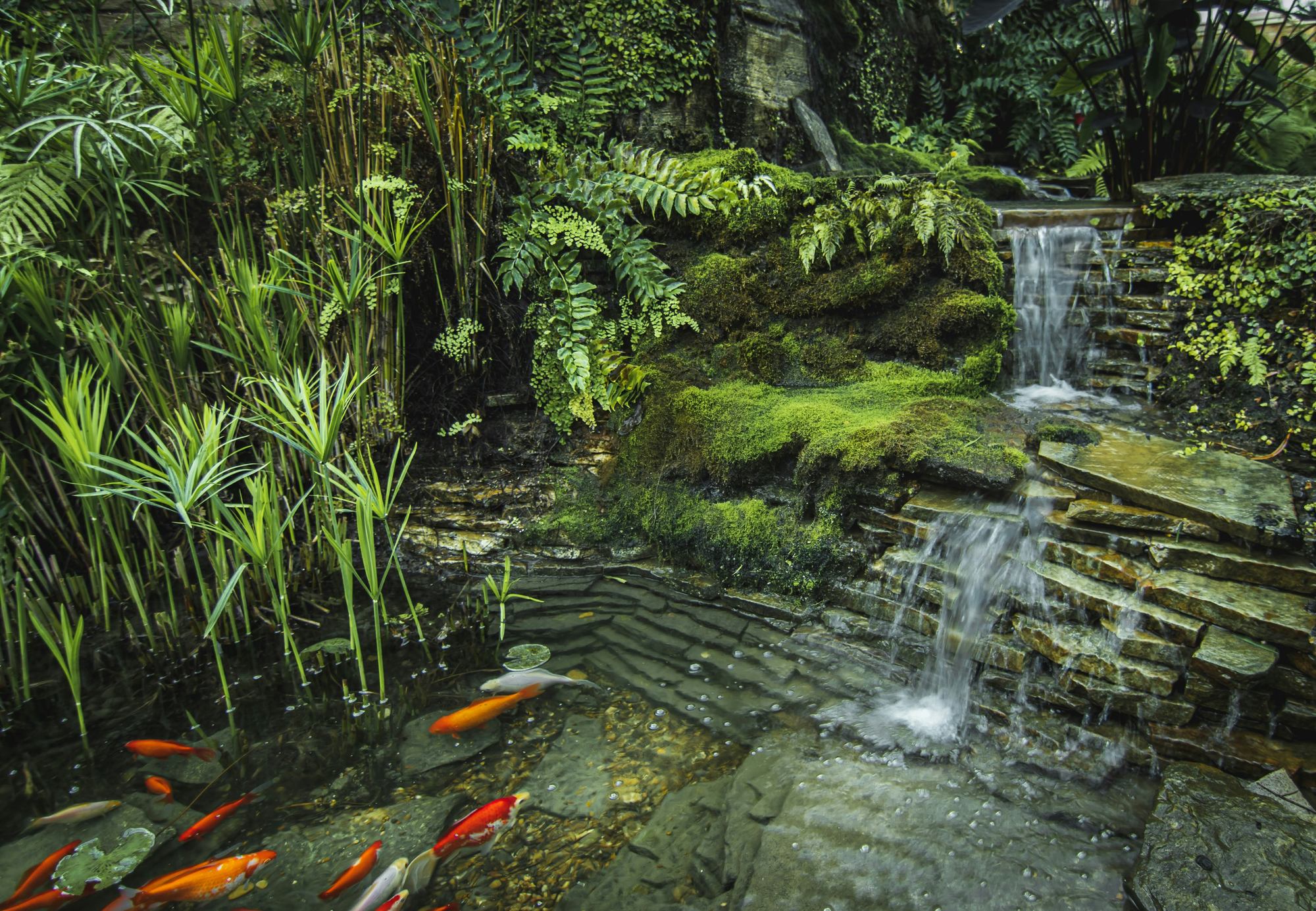
Why Go With Us For Koi Pond Construction
Most ponds sold as koi ponds in this city are garden ponds with koi in them. They are two feet deep, the pump sits on the bottom, there is no drain and no settlement, and the fish spend their lives in water the filter is losing to. Everything works for about eighteen months, which is roughly how long it takes a batch of small koi to get big. We build the system first: depth, drain, settlement, biofilter, aeration and turnover specified from the fish load you actually want, not from a catalog kit. Every part of the plumbing is valved and unioned so a chamber can be cleaned or a pump swapped without draining the pond. We build in quarantine capacity on the larger jobs, because bringing a new fish straight into a stocked pond is how most koi disease arrives. And we service what we build, so the people who sized the filter are the ones who find out whether it was right.
- Depth of four to five feet as standard, with a deep refuge the herons on the LA River cannot reach.
- Bottom drain and settlement chamber on every koi build, so solids leave the system instead of composting in the gravel.
- Biological filtration sized to fish load, with the media graded and the flow set for real contact time.
- Aeration designed for a Los Angeles heat wave, when warm water holds the least oxygen and the fish need the most.
- Every chamber valved and unioned so servicing never means draining the pond.
- Ongoing pond maintenance from the same crew, with water chemistry recorded at every visit.
Reasons To Build A Koi Pond
Koi ponds get built for reasons that have very little to do with landscaping:
You want fish you can keep for decades
Koi routinely live twenty to thirty years in a well-run pond, and they learn who feeds them. People who keep them properly end up with the same fish through several house moves, which is a different relationship from stocking a water garden with a dozen goldfish.
The fish you have have outgrown the pond
This is the most common call we get. Six small koi in a two-foot garden pond look fine for a year or two, then the ammonia starts spiking, the water goes green every summer and the fish sit at the bottom. The pond has not changed; the fish load has tripled.
You are buying quality fish
Once somebody starts buying graded koi rather than pond-store fish, the water has to match the investment. Color development, growth rate and disease resistance all track water quality, and the difference between good and mediocre filtration is visible in the fish within a season.
You want the pond to be the garden
A koi pond is a viewing pond. It runs clear enough to see the fish at four feet, the edges are built to stand at, and the planting is arranged around sightlines rather than covering the surface. That is a different design brief from a lily-covered water garden and it produces a different-looking yard.
The summers here are hard on fish
Los Angeles heat waves push shallow ponds past 80°F, and warm water holds less oxygen exactly when the fish need more. Depth buys thermal stability, aeration buys oxygen, and shade over part of the surface buys both. Every fish loss we get called about in August traces back to one of the three.
You want to breed or show
Spawning, growing on and showing all need more system than a display pond: quarantine, controllable water, somewhere to separate fish and enough filtration headroom to carry a season of fry. It is worth designing in at the start even if it is a few years away.
Tell us how many koi you want and how big you want them to get, and we will size the pond and the filtration to that instead of the other way round. Call: (818) 293-2214
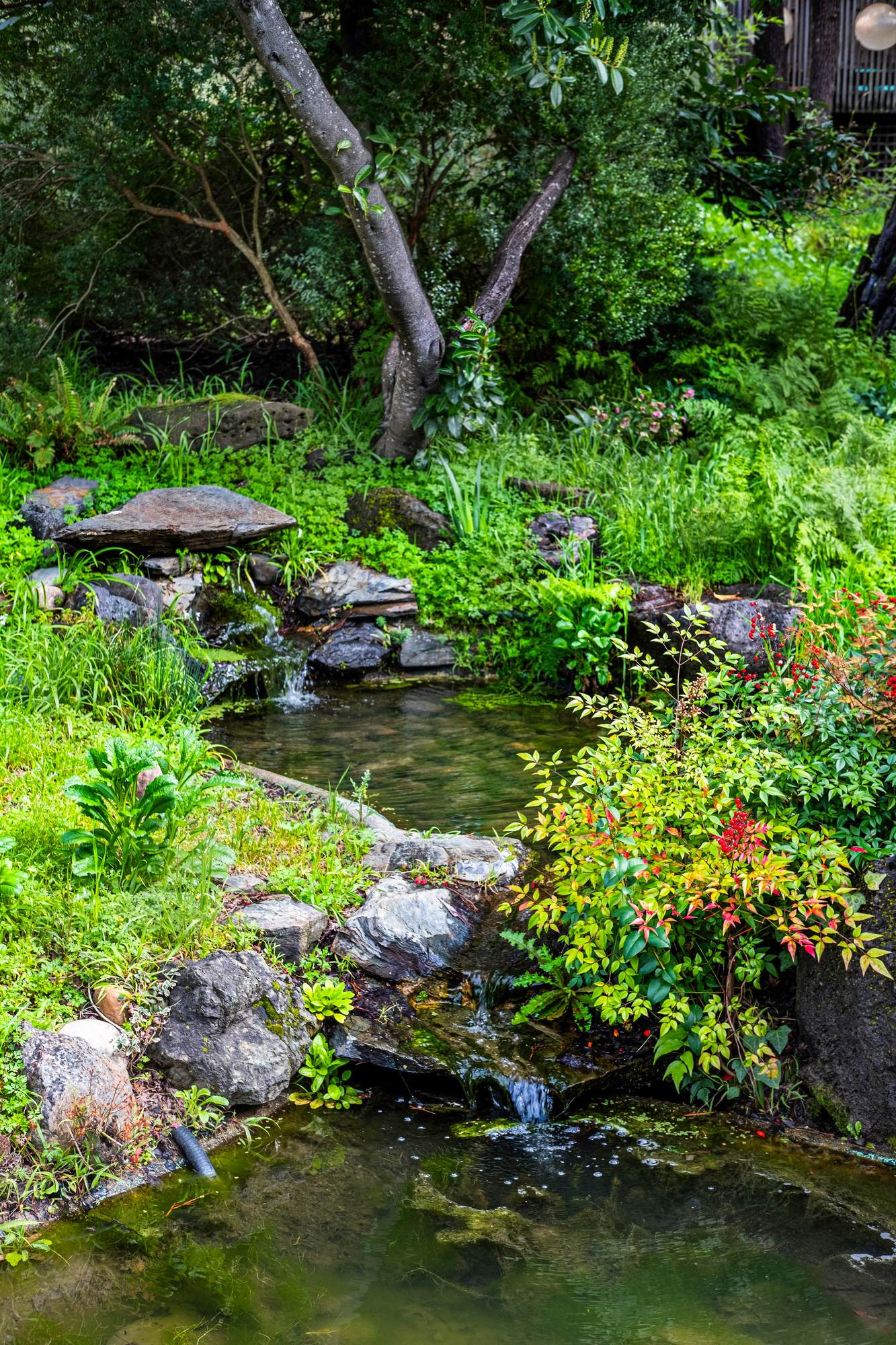
How A Koi Pond Gets Built
Same construction sequence as any pond, with the fish system designed first.
1. Stocking plan and system sizing
We start from the fish: how many, how big you want them, whether you plan to buy graded koi. That gives the volume, the depth, the turnover, the drain and chamber sizes and the biofilter media volume. Everything else in the design is built around those numbers.
2. Design, permit and layout
Layout for viewing rather than coverage, with the deep end away from the seating and the equipment somewhere serviceable and quiet. Koi depth is always past eighteen inches, so barrier and permit requirements apply in Los Angeles and we file for them.
3. Excavation and the drain
Dig deep, fall the base toward the bottom drain, set the drain and its line before anything else goes in. This is the part that cannot be added later without emptying and re-lining the pond, which is why retrofits cost what they cost.
4. Liner, chambers and plumbing
Underlayment and 45-mil EPDM, drain boot sealed, skimmer set, settlement chamber and biofilter plumbed in gravity or pumped configuration depending on levels, aeration lines run to the deep end, and every stage valved so it can be isolated and cleaned.
5. Fill, cycle and stock
Fill, dechlorinate, seed the bacteria and run the system with no fish or a very light load while it cycles, which takes four to six weeks. Then stock gradually, testing as you go. Rushing this stage is the single most common way new koi ponds lose fish.
Depth, Drains, Filtration And Keeping Koi Alive
The parts of a koi system worth understanding before you commit to one:
Koi pond depth
Three feet is the working minimum, four to five is what we build, and six is worth having on large ponds. Depth stabilises temperature through a Los Angeles summer, gives fish a refuge from herons, and gives koi the water column they need to develop proper body shape. It also puts the pond firmly into permit and barrier territory here, which is a design input rather than an afterthought.
Bottom drain and settlement
A bottom drain takes solid waste out of the lowest point by gravity instead of leaving it to break down in the gravel and feed algae. It feeds a settlement chamber or vortex where the solids drop out before the water reaches the biological media. This pairing is the clearest single difference between a koi pond and a garden pond with koi in it.
Biological filtration
Bacteria on the media convert ammonia to nitrite and nitrite to nitrate. The media volume has to match the waste the fish produce, and the flow has to be slow enough through it for real contact time. Undersizing here does not show up until the fish grow, which is exactly when it is most expensive to fix.
Turnover and aeration
A koi pond wants its whole volume through the filter once an hour, twice on a heavy load. Separately, it wants air: a diffuser on the bottom in the deep end, running continuously. Warm water holds less dissolved oxygen, so the August nights when the fish need the most are the nights the water carries the least.
Stocking rates
The rule of thumb we use is 250 gallons per adult koi, with 500 for large or show-grade fish. That sounds generous until a 10-inch fish becomes a 24-inch fish. Most overstocked ponds in this city were stocked sensibly for the fish that went in and never revisited as they grew.
Predator protection
Great blue herons work the LA River, Ballona Creek and the Sepulveda Basin and will find a pond within days. Raccoons are everywhere. Steep sides, four feet of depth, a fish cave or overhang, netting through the worst months and a motion-activated sprinkler between them keep losses down. A pond built with shallow shelves all round has no answer for either.
Quarantine
New koi should spend two to four weeks in a separate tank with its own filtration before joining the pond. Most disease outbreaks in established ponds arrive with a new fish. On larger builds we plumb a quarantine position in from the start, which makes it something people actually use.
Water quality in Los Angeles
Tap water here is hard and alkaline, which koi handle well: the mineral content gives good buffering and steady pH. It is also chlorinated or chloraminated, so every top-up needs treating. In practice this is a good city to keep koi in, provided the top-up is dechlorinated and the summer aeration is honest.
What A Koi Pond Costs In Los Angeles
A modest koi pond of 1,500 to 2,500 gallons with a drain, settlement and proper filtration typically runs $25,000 to $50,000. Larger display systems go from $60,000 to well past $100,000. What drives it:
- Volume and depth. Four to five feet of excavation over a large footprint is a lot of dirt, and in this city the dirt has to go somewhere.
- The filtration train. Bottom drain, settlement chamber, biofilter, UV and aeration is a system rather than a pump in a box, and it is the part that keeps the fish alive.
- Turnover. Sizing for one to two volume changes an hour sets the pump, the pipe diameter and the running cost for the life of the pond.
- Access and spoil. Same as any dig here: whether a machine can reach the back yard changes the excavation price more than the volume does.
- Rockwork and edging. Koi ponds are viewing ponds, so the edge is built to stand and lean on, which means proper coping and set stone.
- Quarantine and extras. A quarantine position, an auto top-up, a drum filter or a heater are each worth deciding on at design stage rather than adding later.
- Permits and barriers. Koi depth always crosses the eighteen-inch line in California, so the safety barrier and the permit are part of the job.
Every koi build is quoted flat-rate including the filtration train, the startup and the cycling support, and we do not hand a pond over before it is running. If the plan is fish as part of a garden rather than the point of it, the pond building page covers that, and a swimming pond is the other direction people go. The full range of water features we build around Los Angeles is on one page.
Frequently Asked Questions
How deep does a koi pond need to be?
Three feet is the minimum we will build for koi, four to five feet is what we recommend, and six is worth it on a large pond. Depth does three things: it stabilises water temperature through Los Angeles summers and the odd cold snap, it gives fish somewhere a wading heron cannot reach, and it gives koi the water column they need to develop proper body shape rather than staying stunted. Depth also has a code consequence here, since anything over eighteen inches is treated as a pool for barrier and permit purposes.
What is the difference between a koi pond and a water garden?
A koi pond is built for fish and a water garden is built for plants, and almost every specification follows from that. Koi ponds are three to five feet deep with a bottom drain, a settlement chamber, heavy biological filtration, high turnover, continuous aeration and relatively sparse planting, because koi eat and uproot plants. Water gardens are one to two feet deep, densely planted with lilies and marginals, lightly stocked with goldfish if anything, and filtered far more modestly because the plants do much of the work. Water gardens cost less and are more forgiving. Koi ponds cost more and keep large fish healthy for decades. Trying to run koi in a water garden is where most of the problems we get called about begin.
How many koi can I keep?
Plan on about 250 gallons per adult koi, and 500 per fish if you want large or show-grade specimens. A 2,000-gallon pond therefore comfortably holds around eight adult koi, not the twenty small ones it would appear to hold on the day they go in. The mistake almost everybody makes is stocking to the size of the fish at purchase: a 6-inch koi becomes a 24-inch koi, and the waste load grows with it. Overstocking shows up as ammonia spikes, persistent green water, stunted growth and disease. If you plan to add fish over time, size the filtration for the pond you will have in five years.
Can I convert my existing pond into a koi pond?
Sometimes, and it depends almost entirely on depth. If the pond is already three feet or more, adding filtration, aeration and a skimmer is straightforward and we do it regularly. If it is a typical two-foot garden pond, the honest answer is that the useful upgrade is a rebuild: a bottom drain has to sit at the lowest point under the liner, and retrofitting one means emptying the pond and re-lining it anyway. We assess the existing build, price both options and let you compare, rather than selling an upgrade that leaves the fundamental problem in place.
What do koi cost and where do you buy them?
Pond-store koi run $20 to $75. Good-quality domestic and imported fish from a specialist dealer run a few hundred dollars each, and show-grade Japanese koi go into the thousands. Southern California is one of the better places in the country to buy, with several serious dealers within driving distance. Whatever you buy, quarantine it for two to four weeks in a separate tank with its own filtration before it joins the pond. Nearly every disease outbreak in an established pond arrives with a new fish, and the cost of a quarantine tank is trivial next to losing a stocked pond.
How do I keep herons and raccoons away from my koi?
Design first: four feet of depth with steep sides means a heron cannot wade, and a fish cave, shelf overhang or length of wide pipe on the bottom gives the koi somewhere to go when a shadow passes. Raccoons work the shallow margins at night, so avoiding a gently shelving edge all the way round helps against them too. Beyond the build, netting through spring and autumn is the only complete answer, and a motion-activated sprinkler is surprisingly effective against both. Herons are common across Los Angeles along the river, Ballona Creek and the Sepulveda Basin, so this is not a hypothetical problem here.
What filtration does a koi pond need?
Three stages, in order. Mechanical: a bottom drain feeding a settlement chamber or vortex, plus a surface skimmer, so solids leave the water before they break down. Biological: media with enough surface area and slow enough flow for bacteria to convert ammonia to nitrite and nitrite to nitrate, sized to the fish load rather than to the gallons. Ultraviolet: a correctly sized clarifier that kills suspended algae, which matters on a sunny Los Angeles pond with the light fish ponds get. On top of that, aeration running continuously and turnover of one to two pond volumes an hour. Skip the settlement stage and the biological media clogs; skip the aeration and the fish struggle in August.
How long before I can put fish in a new koi pond?
Four to six weeks from filling, and the wait is not optional. A new filter has no bacteria in it, so ammonia from the first fish has nothing to convert it and levels climb until they are toxic. The pond is cycled by seeding beneficial bacteria and either running it fishless with an ammonia source or stocking a very small number of hardy fish and testing daily. When ammonia and nitrite both read zero and nitrate is climbing, the filter is working. Then stock gradually over a few months rather than all at once. Most new-pond fish losses in this city are a cycle that was rushed.
Planning a pond in Los Angeles?
Tell us what the yard looks like and what you are imagining, and we will come back with a free estimate and a flat-rate price.
Or call us now: (818) 293-2214