
Los Angeles · Pond & Water Feature Services
Pond Maintenance
Scheduled service, spring cleanouts, filter and pump work, algae control and repairs, on ponds we built and ponds we inherited.
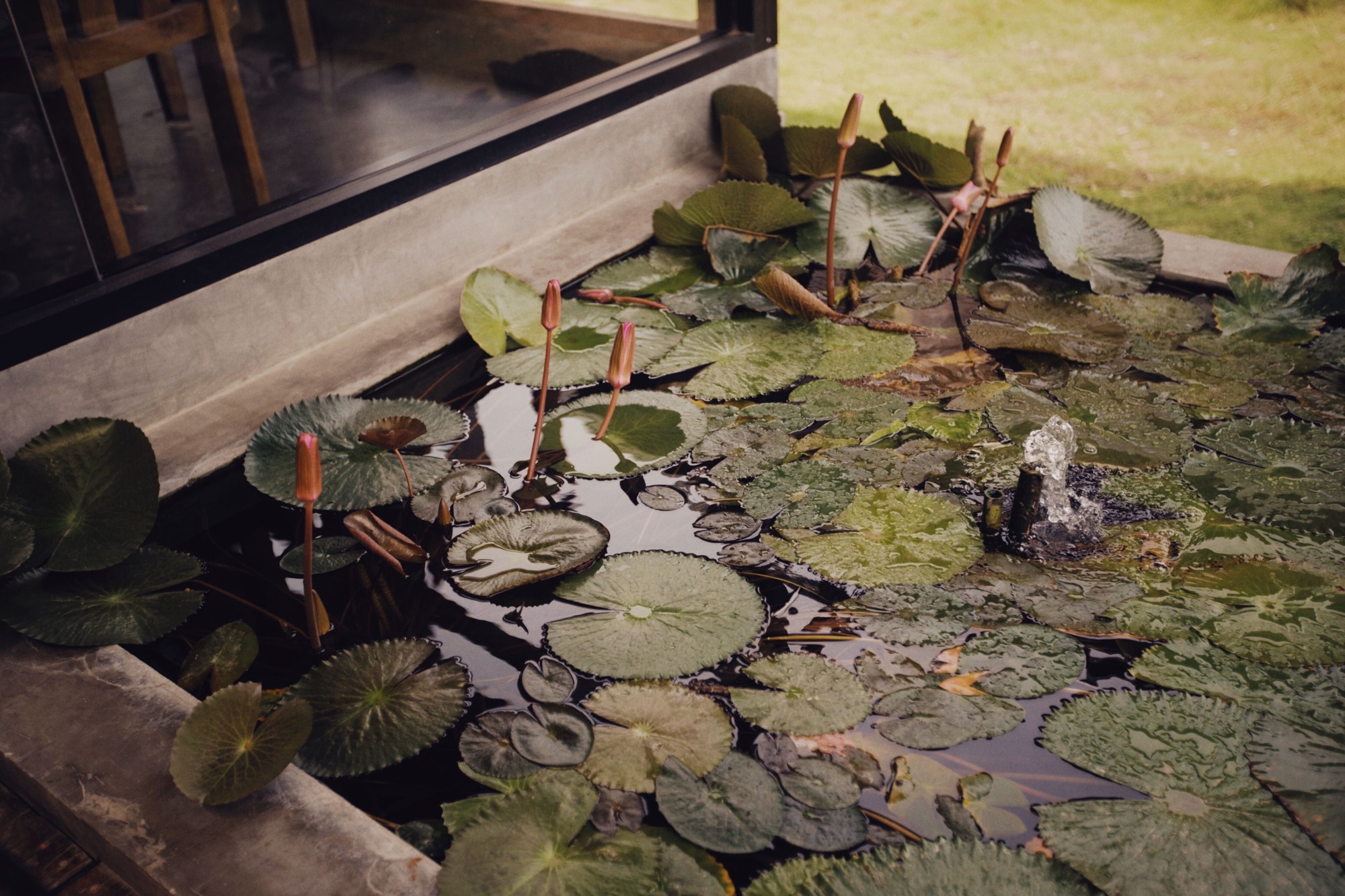
Pond Maintenance · Los Angeles
What Pond Maintenance Covers
A pond is a small ecosystem with a pump attached, and both halves need attention. Maintenance covers the routine visit, which is skimmer and filter cleaning, netting debris, checking the pump and the water level, trimming and dividing the plants, dosing beneficial bacteria and testing ammonia, nitrite, nitrate and pH. It also covers the once-a-year work: a full pond cleaning where the fish come out into a holding tank, the water goes down, the muck comes off the bottom, the rocks get rinsed, the liner gets inspected and the whole thing refills clean. Then there is the reactive side, which is why most people call us the first time. Green water, string algae, a pump that has stopped, a liner that is losing an inch a day, a filter that was never sized properly, or a pond somebody inherited when they bought the house and has no idea how to run. We take all of it, on ponds we built and ponds we did not, and the first visit on an unfamiliar pond is an assessment rather than a quick tidy.
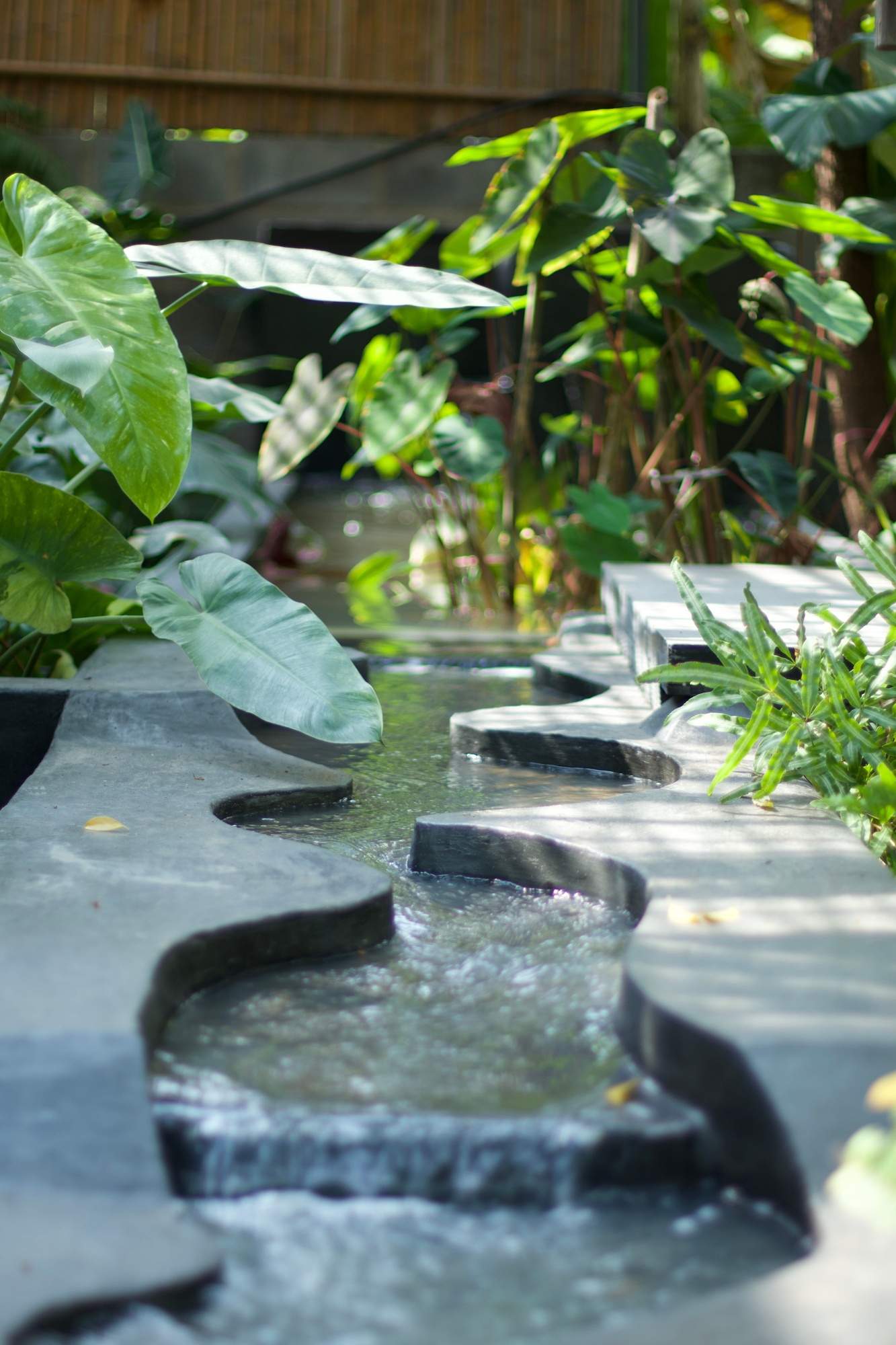
Why Have Us Service It
Pond service in Los Angeles is mostly done by gardeners who treat a pond as a wet planter, which is how ponds end up dosed with algaecide every fortnight and never actually balanced. We approach it the other way around. If a pond keeps going green, something is wrong with the turnover, the filtration, the fish load, the shade or the nutrients, and fixing that once is cheaper than dosing forever. Our crews are the same people who build these systems, so a technician standing at your skimmer already knows how the plumbing behind it was put together and what it costs to change. We carry pumps and parts on the truck for the common brands, we can drain, patch and refill a liner leak in a day, and when a pond is failing because of how it was put together, we say so instead of selling another year of visits.
- Monthly, twice-monthly or one-off visits, on ponds we built and ponds we have never seen before.
- Water tested at every visit, with ammonia, nitrite, nitrate and pH recorded rather than guessed.
- Algae treated by fixing the cause first, with dosing as a bridge instead of a permanent subscription.
- Pumps, filters, UV lamps and liner patches carried on the truck, so most faults are fixed on the same visit.
- Full spring cleanouts with the fish held safely and the liner inspected while the water is down.
- Honest calls on inherited ponds, including when a rebuild by our pond building crew is the cheaper answer.
Reasons To Put A Pond On A Service Schedule
The ponds that stay clear are almost always the ones somebody looks at on a schedule. The usual triggers for calling:
The water went green
Single-celled algae bloom when there is more light and nutrient than the plants and the biofilter can absorb. It is most common in a new pond in its first summer and in an established pond after the fish load has quietly grown. A UV clarifier clears the water in days; the balance work stops it coming back.
String algae is taking over
The long hair-like algae on rocks and waterfalls is a different problem from green water and does not respond to UV at all. It feeds on the same excess nutrient, and the fix is a combination of manual removal, phosphate control, more marginal planting and, on stubborn ponds, a barley or peroxide-based treatment used properly rather than poured in by guesswork.
The level keeps dropping
Los Angeles evaporation runs about an inch to an inch and a half a week in high summer, so some loss is normal. More than that, especially if it stops at one level and holds, means a leak in the stream, the falls or the liner edge, and it is usually found by isolating the pump and watching. Finding it is a service visit; ignoring it is a water bill.
You inherited the pond with the house
A large share of our maintenance work is a pond somebody bought without asking for. The first visit is a full assessment: what the plumbing is, whether the filtration matches the volume, whether the fish are healthy, what the liner is doing and what it will cost to run properly.
Autumn is coming
Sycamore, liquidambar and oak drop heavily across this city from October, and leaves left to break down in a pond feed next summer’s algae. Netting the pond, cutting back the marginals and clearing the skimmer through leaf fall is the cheapest single thing anybody can do for water quality.
The fish look wrong
Flashing, gasping at the surface, clamped fins or sudden losses point at water chemistry, oxygen or parasites, and all of them are time-sensitive. Ammonia and nitrite are the first two numbers to check, and a heavily stocked koi pond in a heat wave is the classic setting for it.
Send a photo of the pond and the equipment and we will tell you what it needs, whether that is a visit, a part or an honest conversation about the build. Call: (818) 293-2214
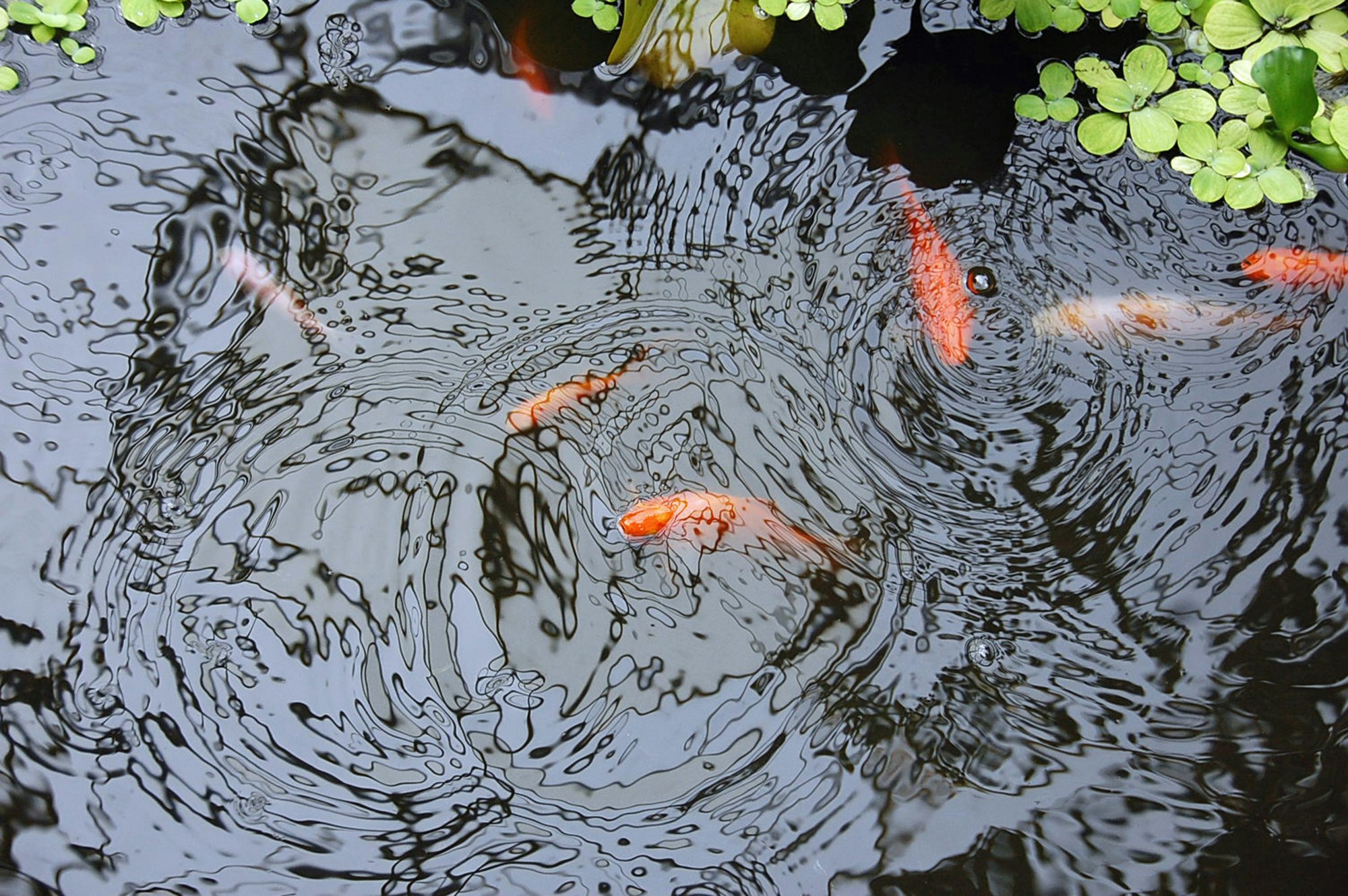
How A Service Visit Works
The routine visit is a rhythm; the annual clean is a day's work with the fish out.
1. First visit and assessment
On a pond we have not seen, the first visit maps it: volume, turnover, filter type and condition, pump size and draw, UV if there is one, fish count, plant coverage and a full water test. You get a written picture of what you have, what is undersized and what it costs to run properly.
2. Routine service
Skimmer basket and mat, filter media rinsed in pond water rather than tap water so the bacteria survive, pump checked, debris netted, water tested, bacteria dosed, plants trimmed and divided, level topped and dechlorinated. Anything failing gets flagged with a price before it is done.
3. Annual cleanout
Usually late winter or early spring. Fish into an aerated holding tank, water down, muck and sediment out, rocks and gravel rinsed, liner and seams inspected, plumbing checked, then a slow refill, dechlorination, bacteria seeding and the fish back once the temperatures match.
4. Repairs and upgrades
Leak finding, liner patching, pump and UV replacement, filter upgrades, adding a bottom drain or a skimmer where the original build had neither. Most of this is a day, and most of it is what turns a pond that fights you into one that runs itself.
5. Seasonal work
Netting before leaf fall, cutting back marginals, adjusting feeding as water temperature drops, checking aeration through a heat wave and clearing the falls after a Santa Ana blows debris in. Southern California ponds run year round, so the calendar is about weather rather than freezing.
Cleaning, Algae, Filtration And Pond Landscaping
The pieces of pond care people ask about most:
Pond cleaning
A full clean means the fish come out, the water goes down and the sediment layer comes off the bottom and out of the gravel. We rinse rather than scrub sterile, because the biofilm on the rocks is doing useful work. Most Los Angeles ponds want this once a year; a heavily planted, lightly stocked water garden can go two.
Green water and algae control
Green water is suspended algae and clears with a correctly sized UV unit. String algae is attached and does not. Both are symptoms of nutrient and light, so the durable fixes are more plants, less feeding, fewer fish, more shade over the water surface and a filter that is actually keeping up. Chemicals have a place as a bridge and no place as a routine.
Filter and pump service
Mechanical media wants rinsing often, biological media wants leaving alone and never rinsing in chlorinated tap water. Pumps want their intake clear and their impeller checked. UV lamps lose output long before they stop lighting, so they are replaced annually whether or not they look alive. Most sudden clarity problems are one of these three.
Water testing and chemistry
Ammonia and nitrite should read zero in a cycled pond. Nitrate climbs and is what water changes and plants are for. pH in Los Angeles tap water sits high and the water is hard, which suits koi fine but means top-ups need dechlorinating and sudden large changes are worth avoiding. We record the numbers at each visit so a trend is visible before it is a problem.
Leak detection and liner repair
The pond gets isolated stage by stage: pump off overnight to test the basin, then the stream and falls run separately. Most leaks turn out to be at the waterfall edge, a settled rock pinning the liner low, or a stream margin that has slumped, rather than a hole in the middle. EPDM patches in place, so a repair is a day rather than a rebuild.
Pond landscaping and planting
Plants are filtration you can look at. Lilies shade the surface and cut algae, marginals like iris, rush and pickerel take up nitrate, and submerged oxygenators help at night. Around the edge, keeping the rock and the planting reading as one thing is what stops a pond looking like a tub set into a lawn. We divide and replant on the annual visit.
Mosquito control
Moving, aerated water with fish in it does not breed mosquitoes, because the surface never sits still long enough. Still edges and a stopped pump do. Where extra cover is wanted, the Greater Los Angeles County Vector Control District supplies mosquitofish to residents at no charge, and they work. A pond that is running properly is a mosquito sink rather than a source.
Predator damage and repairs
Raccoons work the shallow shelves and will pull plants and dislodge rocks; herons stand and wait. Both leave physical damage as well as missing fish. Steep-sided shelves, a deep refuge, netting through the worst months and a motion sprinkler are the practical answers, and repairing the disturbed rockwork is a normal part of service in this city.
What Pond Maintenance Costs In Los Angeles
Routine visits run about $125 to $300 depending on size and frequency. A full seasonal cleanout is typically $450 to $1,200. Repairs are quoted on what they are. What moves it:
- Pond size and volume. A 500-gallon water garden and a 6,000-gallon koi system are different visits with different amounts of media to handle.
- Frequency. Monthly is the common schedule. Twice a month suits heavily stocked koi ponds and anything under heavy tree cover; quarterly suits a lightly planted feature.
- Fish load. More fish means more waste, more testing, more filter cleaning and, in summer, aeration checks.
- How the pond was built. A pond with a skimmer, a bottom drain and unions services quickly. One with a pump sitting on the bottom and no isolation takes twice as long every single visit.
- Tree cover. A pond under a liquidambar or a sycamore is a different maintenance job from an open one, especially between October and January.
- Condition on arrival. An inherited pond that has not been cleaned in years starts with a restoration rather than a service visit, and that is priced separately.
- Access and water supply. Getting a hose, a pump-out and a holding tank to the pond matters on the tighter westside lots.
Service is month to month with no lock-in, and a single visit is fine if that is all you want. If a pond keeps failing because of how it was built, we will price the fix rather than sell you another year of visits, and the pond building crew handles that work. You can see everything else we do for water features around Los Angeles on one page.
Frequently Asked Questions
How often does a pond need maintenance?
Weekly, there is five minutes of owner work: check the water level, glance at the skimmer basket, look at the fish and feed sensibly. Monthly, a professional visit covers filter media, pump check, water testing, bacteria dosing and plant work. Annually, the pond wants a full cleanout with the fish out and the sediment off the bottom, usually late winter before the water warms. Ponds under heavy tree cover or with a big koi load move to twice a month; a lightly stocked water garden can stretch to quarterly.
Why is my pond water green and how do I fix it?
Green water is suspended single-celled algae, and it blooms when light and nutrient exceed what the plants and the biofilter can take up. The usual causes are a new pond that has not cycled, too many fish, too much food, not enough plant coverage, an undersized filter or full afternoon sun. A correctly sized UV clarifier will clear it within a few days, but that treats the symptom. The durable fix is surface shade from lilies, more marginal planting, less feeding, an honest look at the fish count and a filter that matches the volume. String algae, the long hair-like kind on rocks and falls, is a separate problem and UV does nothing for it.
Does the pump really have to run all the time?
Yes, on any pond with fish. The biological filter is a bacteria colony that needs continuous oxygenated flow, and it starts dying within hours of the pump stopping, which is why ponds that get switched off overnight crash a few days later. Circulation is also what keeps oxygen in the water through a Los Angeles summer night and what stops mosquitoes breeding. A modern energy-efficient pump on a typical back yard pond costs roughly $15 to $40 a month to run, and it is the cheapest part of owning a pond. The waterfall can be valved back at night if the sound carries into a bedroom.
What happens during a full pond cleanout?
The fish come out into an aerated holding tank of their own pond water. The pond is drained, and the sediment, leaf litter and muck are removed from the bottom and out of the gravel. Rocks and gravel are rinsed rather than scrubbed sterile, because the biofilm on them is part of the filtration. The liner and the seams get inspected while they are visible, the plumbing, skimmer and biofalls are cleaned and checked, the plants are divided and replanted, then a slow refill with dechlorination, fresh bacteria and the fish returned once temperatures match. It is a half to full day on most ponds.
Can you service a pond you did not build?
Yes, and it is most of what this side of the business does. Los Angeles has decades of ponds behind it, plenty of them built by landscapers who never came back. The first visit is an assessment rather than a tidy: volume, turnover, filter and pump condition, fish load, plant coverage, liner state and a full water test, written up so you know what you actually own. Sometimes the answer is a straightforward service schedule. Sometimes it is a pump or filter that was never the right size. Occasionally it is that the pond was built badly enough that repair money is better spent on a rebuild, and we will say so.
How do I stop losing fish to herons and raccoons?
Depth and geometry first. Three feet or more with steep sides gives fish somewhere a heron cannot wade to, while a gently shelving pond is a wading bird’s buffet. Add a refuge, which can be a fish cave, a shelf overhang or a length of wide pipe on the bottom. Raccoons work the shallow margins at night, so a steep first shelf helps against them too. Netting through spring and autumn, a motion-activated sprinkler and keeping the fish trained not to beg at a fixed spot all help. Full protection is a net; everything else raises the odds.
What maintenance does a pond need in winter here?
Southern California ponds run all year, so there is no shutdown and no de-icer. Below about 50°F koi metabolism slows and feeding should stop, because food they cannot digest sits in the gut and causes problems. Keep the pump running for oxygen and flow. The real winter work is debris: leaf fall runs late here, and a net over the pond from October through December saves a green May. Storms bring silt and green waste into ponds on hillside lots, so the skimmer wants checking after a big one.
My pond is losing water. Is it a leak?
Maybe. Evaporation alone takes about an inch to an inch and a half a week off an unshaded Los Angeles pond in high summer, and a long, shallow stream can add to that on a windy site. A useful first test is to switch the pump off overnight and mark the level: if it holds still with the pump off but drops with it on, the loss is in the stream, the falls or a plumbing joint rather than the basin. If it drops either way and then stops at a particular height, the leak is at that level. Most leaks we find are a settled rock pinning the liner below the waterline at the waterfall edge, which is a same-day fix.
Planning a pond in Los Angeles?
Tell us what the yard looks like and what you are imagining, and we will come back with a free estimate and a flat-rate price.
Or call us now: (818) 293-2214