Los Angeles · Pond & Water Feature Services
Fountains
Tiered, wall, jet and disappearing fountains set, plumbed and wired, plus repairs and descaling on the ones already in the garden.
Fountains · Los Angeles
What Kind Of Fountain Fits
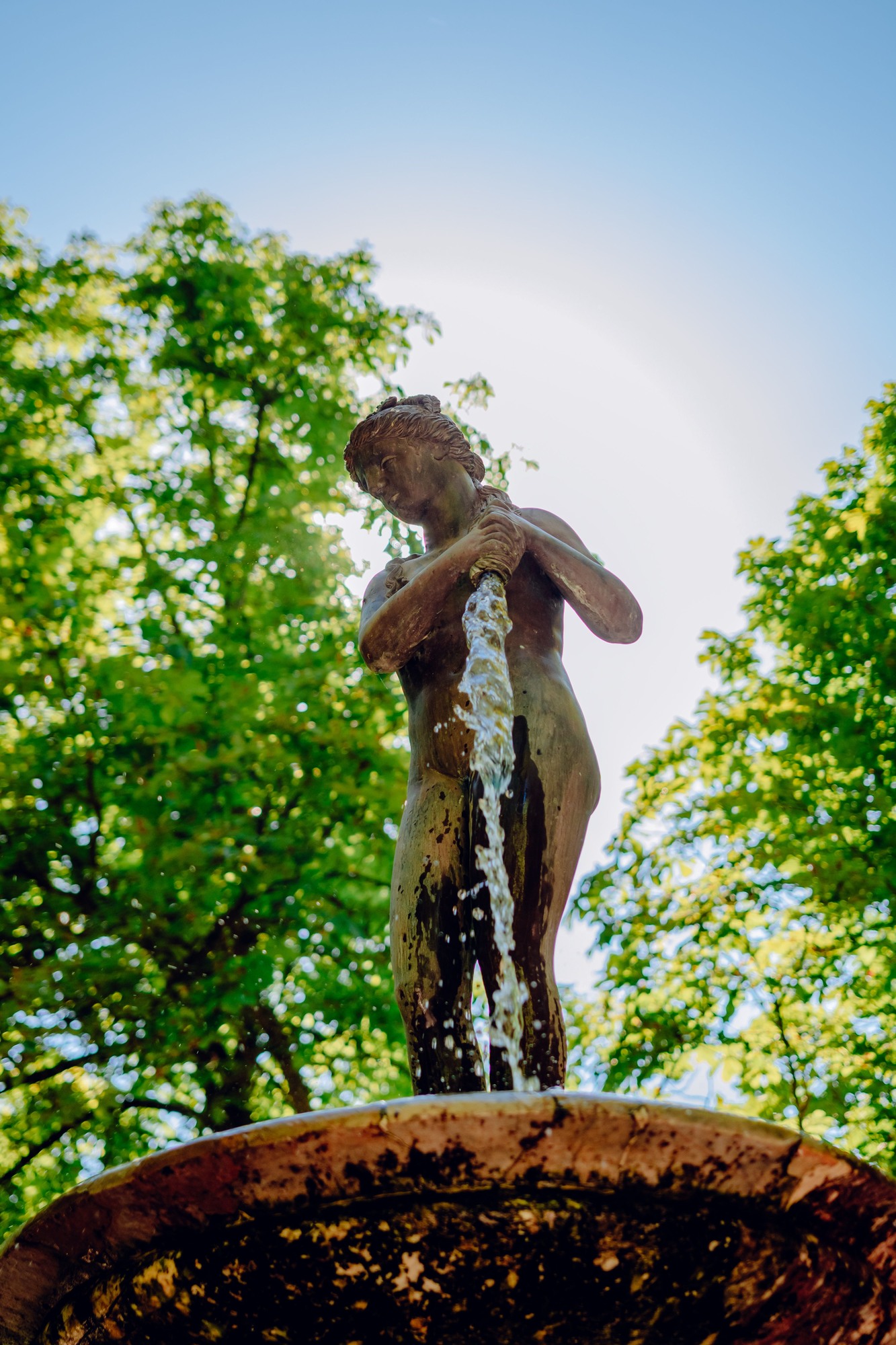
A fountain is the formal end of garden water. Where a pond is shaped like a piece of landscape and a waterfall is shaped like an outcrop, a fountain is unmistakably an object, and it belongs in the places gardens are architectural: courtyards, entries, terraces, walled gardens and the axis of a formal planting scheme. Southern California has a long tradition of them, which is why cast stone tiered fountains sit so naturally against the Spanish Colonial and Mediterranean houses across Hancock Park, Pasadena, Beverly Hills and the older Valley streets. Four types cover almost everything we install. Tiered and pedestal fountains stand free in a basin. Wall fountains fix to a structure and spill into a trough. Jet and bubbler fountains push water up from a basin or a flush deck. Disappearing fountains have no visible basin at all, with the water welling from a stone, urn or column into gravel over a hidden reservoir. That last group is the same construction as our water features, and it is the one that avoids standing water entirely.
Why Have Us Set It
Most fountain problems in this city trace back to installation rather than the fountain. A heavy cast stone piece set on unprepared ground tilts within a year, and a tilted fountain spills unevenly and stains one side. A pump run off an extension cord across a courtyard is both a hazard and a nuisance. No autofill means somebody has to remember a hose in August. And nobody mentions the water: Los Angeles tap water is hard, so scale builds on every wet surface, and a fountain installed without anybody explaining that is a fountain that looks chalky in two years. We set on a proper compacted and leveled base, run a dedicated GFCI circuit, plumb an autofill where there is a supply to take it, and set the flow so the spill is even all the way round. We also repair and restore, which in this city is a steady stream of tilted basins, seized pumps, cracked cast stone and fountains that were switched off years ago.
- Set on a compacted, leveled base so a heavy stone piece does not tilt and spill unevenly.
- Dedicated GFCI circuit run in conduit by a licensed electrician, not a cord under a doormat.
- Autofill plumbed where there is a supply, so the basin does not run dry while you are away.
- Flow set at commissioning so the spill is even and the sound is what you asked for.
- Repairs, descaling, re-leveling, pump replacement and crack repair on existing fountains.
- Straight advice on hard water and scale before you choose a finish rather than after.
Reasons To Install A Fountain
Fountains get chosen where the garden is architectural rather than naturalistic:
The house has a courtyard
Spanish Colonial, Mediterranean and Mission-influenced houses across Hancock Park, Pasadena, Beverly Hills and the older Valley streets were designed around a courtyard, and a tiered fountain is what the space was drawn for.
The entry needs a focal point
Front courtyards and entry paths use a fountain as an arrival marker. It reads immediately, works at night with one uplight, and needs a fraction of the room a pond would.
The planting scheme is formal
Clipped hedging, gravel walks, symmetry and an axis all want an object at the center. A naturalistic pond fights that geometry; a fountain completes it.
There is no room for anything else
A wall fountain gives up no floor area at all, which is why it is the answer on narrow side yards and small walled gardens in Venice, Santa Monica and the older parts of the city.
You want water with no ecosystem
A fountain has no fish, no plants and no biology to balance. It is a pump, a basin and a surface, and the maintenance reflects that. For a lot of people that is precisely the appeal.
You already have one and it stopped
A large share of this work is fountains that have been off for years. Seized pump, cracked basin, blocked line, tilted base or simply nobody knowing where the switch is. Most of them are worth restoring.
Send a photo of the spot or of the fountain that stopped working, and we will tell you what it needs. Call: (818) 293-2214
How A Fountain Install Works
Usually a day or two, and the base is the part that matters.
1. Selection and siting
Style, material, height and spill type chosen against the architecture and the sightlines, with the sound and the splash radius discussed honestly. Big cast stone pieces need to be looked at in place before they are set, because they read differently in a garden than in a yard.
2. Base preparation
Compacted base, pad or footing depending on the weight, leveled properly. This is the step most often skipped and the reason so many older fountains sit crooked and spill down one face.
3. Electrical and plumbing
Dedicated GFCI circuit in conduit to a weatherproof box, autofill teed off an irrigation line where one is available, and a drain or overflow if the basin needs it. Low-voltage lighting goes in at the same time.
4. Setting and assembly
Basin, pedestal, bowls and finial set and shimmed level, joints sealed where they need to be, pump fitted on an accessible union with a flow valve reachable without dismantling anything.
5. Fill, tune and handover
Fill, run it, check the spill is even all the way round, set the flow, check the splash against wind, then show you the pump, the valve, the fill point and how to descale it. Cast stone changes color as it weathers and we say what to expect.
Types, Materials, Scale And Repairs
What to decide before buying a fountain:
Tiered and pedestal fountains
The classic form: a basin, a pedestal, one or more bowls and often a finial, in cast stone or concrete. They suit Mediterranean and Spanish Colonial architecture, they are heavy enough to need a real base, and the spill has to be level all the way round or the effect is lost immediately.
Wall fountains
A mask, spout or slot fixed to a wall, spilling into a trough or basin below. They use no floor area, which makes them the practical answer in narrow courtyards and side yards. The work is in chasing the plumbing in properly and fixing to something that will hold the weight.
Jet and bubbler fountains
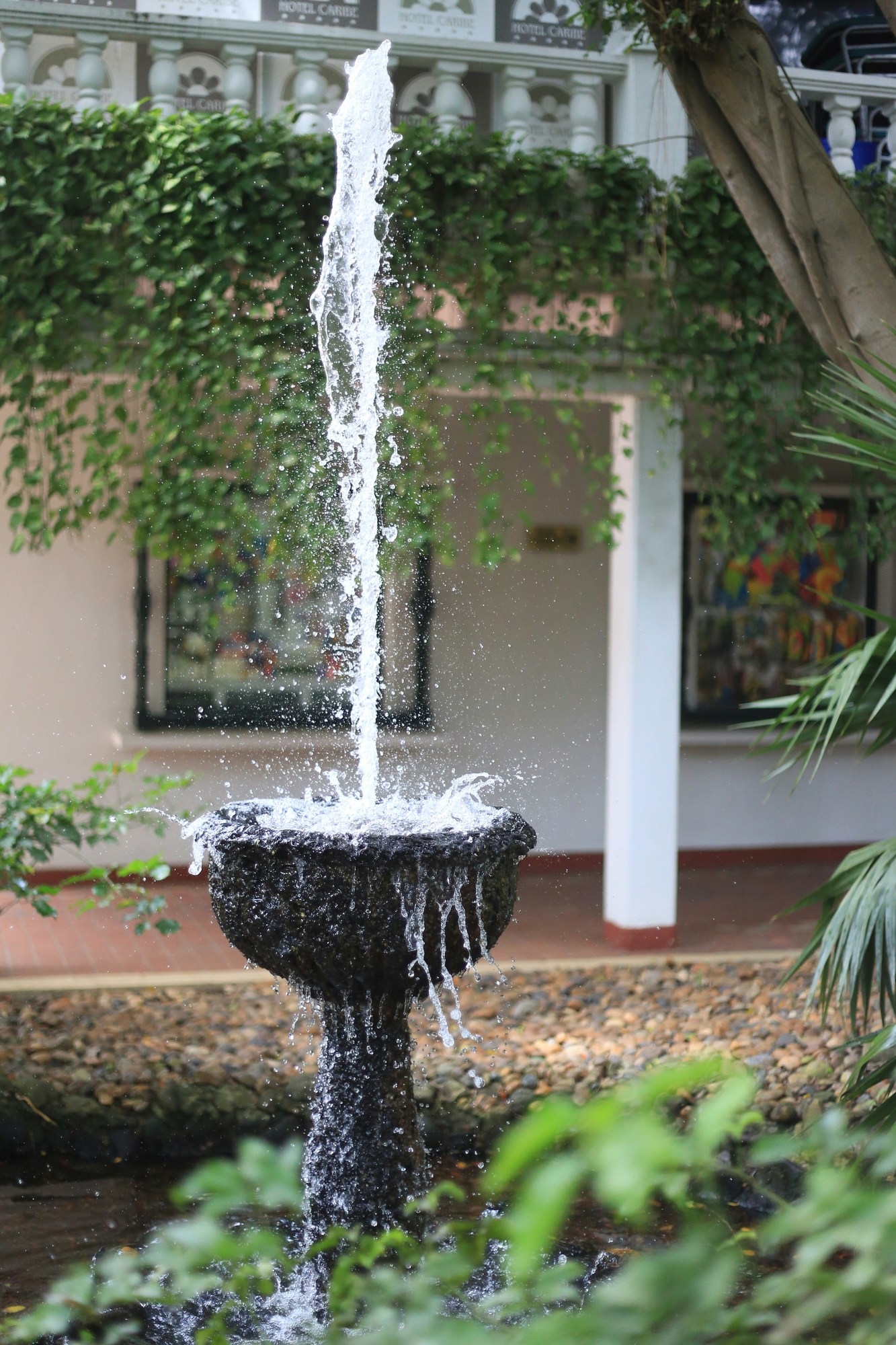
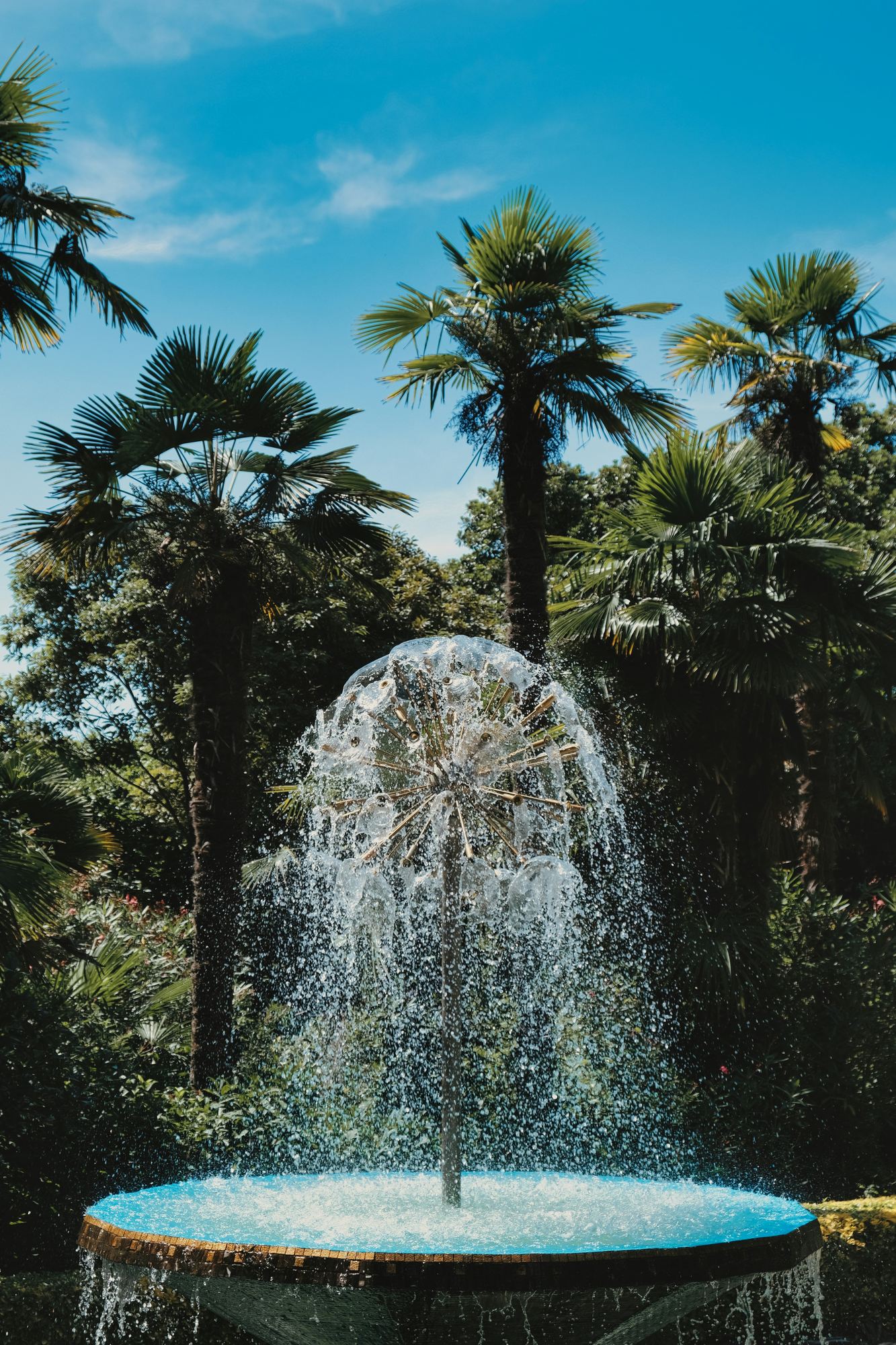
Water pushed upward from a basin or a flush deck, from a soft bubble to a real jet. Deck-level installations with the reservoir underground are popular on modern houses and around commercial entries, and they are the only fountain type children are actively encouraged to stand in.
Disappearing fountains
A drilled stone, urn or column with water welling over it into gravel above a buried reservoir. No visible standing water, nothing to fall into, no barrier requirement and minimal upkeep. Same construction as our pondless features and the easiest fountain to live with.
Materials
Cast stone and concrete are the traditional choice here and weather to a good patina. Glazed ceramic gives color and does not scale as visibly. Natural stone is the most expensive and the most permanent. Corten and metal suit contemporary architecture and stain the surface below them by design. Fiberglass is light and cheap and looks it within a few years.
Hard water and scale
Los Angeles tap water is hard, so mineral deposits build on any wet surface. On cast stone that reads as a white film; on dark ceramic and metal it is more obvious. Managing it means periodic descaling with a product made for the purpose, keeping the fountain running rather than letting it evaporate down, and, where somebody really cares, filling with softened or filtered water.
Pumps and running cost
Fountain pumps are small. A typical garden fountain costs a few dollars a month to run, and the pump is submerged, cheap and easy to replace when it fails. The failure mode is almost always a basin allowed to run dry, which is exactly what an autofill prevents.
Repairs and restoration
Re-leveling a tilted piece, replacing a seized pump, clearing a blocked riser, patching cracked cast stone, resealing joints, descaling a chalked surface and adding an autofill and a proper circuit to a fountain that never had either. Most fountains people assume are finished are a day’s work away from running again.
What A Fountain Costs In Los Angeles
A small self-contained fountain supplied and installed runs about $1,500 to $4,000. A cast stone tiered fountain set properly runs $4,000 to $12,000. Large custom and commercial work goes well beyond that. What moves it:
- The piece itself. Fiberglass, cast stone, glazed ceramic and carved natural stone span a very wide range before installation.
- Size and weight. Heavy pieces need a footing, and sometimes a machine or a crane to place, which is the usual cost jump.
- Base preparation. A compacted pad or a poured footing, done properly, is what stops the fountain tilting later.
- Electrical. A new dedicated GFCI circuit to a courtyard or a far corner of a garden is a real line item.
- Plumbing. An autofill teed off an irrigation line is inexpensive where a line is nearby and less so where it is not.
- Access. Courtyards reached through a house, or entries behind a gate, change how a heavy piece gets in.
- Lighting and finish. Low-voltage lighting, and the planting and paving that set the fountain into its surroundings.
Supply-and-install and install-only are both fine, and repairs are quoted after a look. If you want something less formal, the water features and waterfalls pages cover the naturalistic end, and the full range of water we build across Los Angeles sits on one page.
Frequently Asked Questions
What type of fountain should I get?
Match it to the architecture. Tiered cast stone fountains suit the Spanish Colonial and Mediterranean houses that fill Hancock Park, Pasadena, Beverly Hills and the older Valley streets, and they want a courtyard or a formal axis to stand in. Wall fountains suit narrow spaces because they use no floor area. Jet and bubbler fountains at deck level suit modern houses and commercial entries. Disappearing fountains, where the water vanishes into gravel over a hidden reservoir, suit anywhere there are small children or where nobody wants standing water to look after. If you tell us the house and send a photo of the spot, we will narrow it to two.
How much does a fountain cost installed?
A small self-contained fountain supplied and installed runs roughly $1,500 to $4,000. A proper cast stone tiered fountain, set on a prepared base with a dedicated circuit and an autofill, runs $4,000 to $12,000 depending on the piece. Large custom stone, commercial entry features and anything needing a crane go well beyond that. Install-only, where you have already bought the fountain, is usually $800 to $3,000 depending on the weight, the base work and how far the electrical has to come.
Do fountains use much water?
No. The water recirculates and the only losses are evaporation and splash. A typical garden fountain in Los Angeles loses a few gallons a week in summer and much less in winter, which is a rounding error next to any irrigated planting. An autofill valve teed off an irrigation line handles it automatically. The bigger water-related issue here is not consumption but hardness: our tap water leaves mineral scale on wet surfaces, which is a cleaning matter rather than a cost one.
Why does my fountain have white deposits on it?
Hard water. Los Angeles tap water carries a lot of dissolved mineral, and as water evaporates off a fountain that mineral stays behind as scale. It shows as a white film on cast stone and as visible crusting on dark ceramic, metal and glass. It is cosmetic rather than damaging. Treat it with a descaler made for fountains rather than household acid, which can etch cast stone and ceramic. Keeping the fountain topped up and running slows it down, because a basin that repeatedly evaporates to nothing concentrates the mineral fastest.
Can you repair a fountain that stopped working?
Usually, yes, and it is a steady part of what we do. The common faults are a seized or burned-out pump, almost always from running dry, a blocked riser or nozzle, a cracked basin or bowl in cast stone, a tilted base making the spill uneven, or an electrical supply that was never correct. Pumps are inexpensive and quick to replace, cast stone can be patched and resealed, and re-leveling is a half day with the right equipment. It is worth a look before assuming a fountain is finished, because the majority of the dead ones we see are running again the same day.
Do I need a permit for a fountain?
Almost never for the fountain, since a basin is well under the eighteen inches of depth that brings barrier requirements in California. The electrical is the part that needs a permit: a new outdoor circuit has to be permitted, in conduit and on a GFCI. Fixing a heavy wall fountain to a structure can raise a structural question on a large piece, and commercial installations in public areas have their own accessibility and safety considerations. For a residential garden fountain, the electrical is the whole of it.
Should I turn the fountain off at night or in winter?
It can run continuously and most do. Running keeps the water moving, which stops mosquitoes and slows scale, and fountain pumps use very little power. Turning it off overnight is fine if the sound carries into a bedroom, and a timer handles that. Winter shutdown is not needed in Los Angeles, since freezing is not a real risk here, though anyone shutting one down for a stretch should drain the basin rather than leave standing water in it. Never leave the pump running with the basin low, which is how most fountain pumps die.
Are fountains safe with small children?
Tiered and pedestal fountains hold shallow water in a basin, which is a lower risk than a pond and not zero. The safest option by a distance is a disappearing fountain, where the water wells over a stone or urn and vanishes into gravel with no accessible standing water at all, and nothing over eighteen inches deep to bring barrier requirements. Deck-level jet fountains are the other child-friendly answer and are actively designed to be played in. If small children are the concern, those are the two we would point you at.
Planning a pond in Los Angeles?
Tell us what the yard looks like and what you are imagining, and we will come back with a free estimate and a flat-rate price.
Or call us now: (818) 293-2214